

When you’re considering how to power your electric vehicle (EV), one of the most significant decisions you’ll face is how to install your Level 2 charging station. You’ve likely encountered two primary options: a NEMA 14-50 outlet for a plug-in charger, or a hardwired installation. The choice between these is not merely a matter of personal preference; it carries implications for safety, convenience, cost, and future-proofing your home’s electrical system. To provide you with the clearest roadmap, we’ll delve into the recommendations of experienced electricians, dissecting the pros and cons of each approach. Think of this as navigating a fork in the road; each path leads to the same destination – powering your EV – but the journey and the long-term implications differ.
Before you can make an informed decision, it’s crucial to understand the fundamental differences between a NEMA 14-50 outlet installation and a hardwired EV charger. These aren’t just technical jargon; they represent distinct electrical configurations that impact your home’s infrastructure.
The NEMA 14-50 Outlet: A Familiar Interface

- Plug & Play Anywhere: With 32A Level 2 charging, this EV Charger delivers fast, daily-ready power for home garages, while the 20ft cable provides ample reach for most parking setups. Includes a NEMA 5-15 adapter for occasional Level 1 charging on the go - a true hybrid for drivers who want one charger that does it all
- Delay Timer & Adjustable Current: Use the built-in timer to delay your start by 1-12 hours and easily harvest off-peak energy savings. Then pick from 6/8/10/12/16/24/32A (Level 2) to match your garage grid. It automatically locks in your favorite setting and never forces you to re-adjust. No complicated apps or Wi-Fi needed - just straightforward, reliable control
- Tactile Buttons & LED Screen: No glitchy smartphone apps or finicky touchscreens that lag, freeze, and misfire in winter. Our EV charger is engineered with a high-definition LED display that tracks critical real-time data, including live voltage and current. Tactile buttons deliver direct, satisfying click feedback that remains highly responsive even when wearing heavy winter gloves or operating in torrential downpours - conditions where standard touchscreens completely fail
- ETL Certified Safety & IP65 All-Weather Shield: ETL certified to meet US safety standards for charging. Engineered with a certified IP65 dust-and-waterproof enclosure and a heavy-duty TPE cable that operates reliably across a wide -22°F to 130°F range. An intelligent multi-protection defense system (GFCI, over-voltage, over-current, surge, short-circuit, and over-temp) keeps a 24/7 watch for 100% safe, unattended overnight charging in any weather
- J1772 Compatible + Dual-Level Charging: Works with all J1772 EVs (Tesla requires a separate J1772 adapter). Level 2: built-in NEMA 14-50 plug. Level 1: included NEMA 5-15 adapter fits any standard outlet. Please confirm your outlet is NEMA 14-50 or 5-15 before purchase

- Charge with Confidence: ChargePoint builds reliable, flexible EV charging stations for home, business, and fleets. Get 24/7 support and access to hundreds of thousands of North American charging locations
- Charge Smart: With the user-friendly ChargePoint Mobile App, you can control your electric car charger, manage reminders, connect to smart home devices, find stations, get data and charging info, and access the latest features
- Vast Network: Wherever you go, ChargePoint’s network includes 274k+ stations across North America and Europe and 565k+ roaming partner stations
- Safe & Durable: Rely on this UL-certified EV charger for safe home charging. It can be installed indoors or outdoors by an electrician and includes a cold-resistant cable
- Fast & Powerful: This EV charger charges 9× faster than a 120V outlet, delivering up to 45 mi/hr., dependent upon your vehicle. It features a J1772 connector for all non-Tesla EVs and plugs into a 240V outlet with a 14-50 receptacle, requiring a 40A or 50A circuit. For Tesla EVs, this will require an adapter

- WORKS WITH EVERY NON-TESLA EV: Standard J1772 connector plugs straight into Ford, Chevrolet, Hyundai, Kia, Nissan, BMW, Volkswagen, Audi, Rivian, Lucid and every other EV or plug-in hybrid sold with a J1772 port - no adapter needed. Tesla drivers can charge too, using the J1772 adapter that comes with the car.
- PLUG IN, NO HARDWIRING: Level 2 charger delivers up to 40A to fully charge most EVs overnight. Plugs into a 240V, 4-prong NEMA 14-50 outlet (the RV/range type - NOT a dryer outlet) on a dedicated 50A circuit. The extra-long 25 ft cable easily reaches across a garage or driveway. Before ordering, check your car's port type and that you have the right outlet.
- CONTROL & SAVE FROM YOUR PHONE: A stronger built-in antenna keeps the charger online even in a garage or basement. Use the free app to start/stop charging, set speed (6-40A), get reminders, and track energy use and cost. Schedule off-peak overnight charging to cut your electric bill. Requires 2.4 GHz WiFi.
- SAFETY-CERTIFIED & WEATHERPROOF: Independently tested and certified (UL, ETL, FCC, Energy Star). A fully sealed IP66 / NEMA 4 housing stands up to rain, snow, heat and dust indoors or out, and internal steel shielding protects the electronics for years of reliable use.
- GLOW-IN-THE-DARK HOLSTER: The included high-visibility holster glows in the dark so you can find and dock the plug easily at night. Holds the connector securely when not in use.

- 【7KW Efficient Charging】VDLPOWERVP level 2 charger is equipped with NEMA 14-50 Plug(220V/240V), it offers 32A current and up7KW output. It will greatly shorten your charging time.
- 【Intelligent Charging-Durable and Safe】The intelligent chip design of its control box can keep monitoring the charging status at any time, provides multiple safety protections such as lightning protection and leakage protection. This electric vehicle charger is made of premuim and sturdy materials and is FCC certified. EV Control box is IP65 waterproof and dustproof.
- 【Easy Charging and Indication Displays】Just connect to the outlet and the car, the ev charger can work properly. LED indicators that can tell you the status as well as indicate errors while charging your electric vehicle. It can help you get the charging station status information quickly.
- 【Portable Design】The ev charger has a 20ft charge cable, which is long enough for you to charge without getting tangled.The appropriate cord length and weight allow you to easily put it in the trunk of an electric car whether you are visiting friends or renting a vacation house.
- 【Contact Us Anytime】This electric vehicle charger has a one-year warranty, if you feel that the product does not meet your expectations, please feel free to contact us and we will try our best to assist you solve it.

- Grizzl-E Avalanche Edition NEMA 14-50 Plug with 24 Feet Premium Cable is a simple, powerful, heavy-duty and portable Electric Vehicle Charging Station which is suitable for any weather. Compatible with all EVs and PHEVs sold in North America.
- UL Full Tested and Certified. Eligible for the Federal Rebate Program. IP67 (Water resistant), Fire resistant. Over Current, Over Voltage , Under Voltage, Missing Diode, Ground Fault, and Over Temperature Protections. Self-Monitoring and Recovery, Power Outage Recovery. Built in GFCI.
- Fast charging and adjustable amperage: 40A, 32A, 24A, 16A. Maximum current output of 40 Amps for 50A circuit breaker, 32 Amps for 40A circuit breaker, 24 Amps for 30A circuit breaker, or 16 Amps for 20A circuit breaker. Charge Rate: 28-30 miles per hour at 40A, 22-25 miles per hour at 32A, 15-18 miles per hour at 24A and 10-12 miles per hour at 16A.

- 【2 In 1 Lightning EV Charger 】Lightning Fast Charging Level 1 & Level 2 EV Charger with adjustable 16/32amp. NEMA 14-50 plug: charge Level 2 vehicle, up to 32Amp 240V, 7 KW Max., 6x faster than a normal 8A level 1 charger. NEMA 5-15 Adaptor: charge Level 1 vehicle, up to 16Amp 110V, 1.7 KW Max., Ideal for older and newer model electric cars.
- 【6X Faster Charging】Level 2 EV Charger with NEMA 14-50 plug fill up your car at an average of 6 times faster than a standard charger, delivering 24 miles in only 1 hour at 240V charge.
- 【LED Screen】The LCD screen display every detail that you need during the charging including the real-time current and voltage, charging amount and time.
- 【Portability & Easy Operation】Charging your EV in anywhere and at any Time. The Portable EV Charger can be carried with your car. Compact controller size for flexible installation and usability, and 20 feet of charging cable can fulfill your demands of charging in driveways and garages.
- 【Safer & Reliable Charger】 Safety is a top priority, which is why this charger is equipped with a LED indicator on the control box. This indicator displays the charging status of your EV, alerting you immediately to any potential issues. Additionally, the charger incorporates triple protection functions, including Leakag Protection, Overcharge Protection, and Under Voltage Protection, ensuring a safe and reliable charging experience.

- ⚡ Fast, Flexible Charging You Control- Equipped with a NEMA 14-50 plug and adjustable current (10A to 40A), the EVDANCE EV Charger gives you total control over your charging speed. Whether you're topping off at work or doing an overnight charge at home, simply tap the control button to select your ideal amperage. It’s precision charging, made easy NOTE: It is necessary to use a J1772 to Tesla adapter(not including) when charging your Tesla vehicles
- 8X Faster Charging: The EVDANCE ev charger level 2 comes with a NEMA 14-50 plug, charging at 240V and the maximum current can reach 40A, which can provide maximum 9.6kWh charging power. Experience unparalleled speed at approximately 8x faster than level 1 ev chargers
- Adjustable Charging Current: EVDANCE Level 2 charger supports adjustable currents settings ranging from 10A to 40A (10A/16A/20A/24A/32A/40A). Just touch the "A" button, you can easily select the appropriate charging speed to suit your specific needs
- Delayed Charging Function: With the delay start feature, you can set your charging time(delay 1-12 hrs), staggering the peak usage period and reducing your energy costs
- Intelligent 2.4"" TFT Display & & LED Indicators: Our 40A electric car charger equipped with a large 2.4"" TFT screen, it provides clear and real-time charging information, including charging current/voltage/power kWh, charging time and work status, etc.The LED indicator on the control box provides real-time charging status
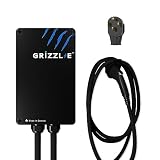
- Grizzl-E Classic NEMA 14-50 Plug with 24 Feet Premium Cable is a simple, powerful, heavy-duty and portable Electric Vehicle Charging Station which is suitable for normal and cold weather. Compatible with all EVs and PHEVs sold in North America.
- UL Full Tested and Certified. Eligible for Federal rebate program. IP67 (Water resistant), Fire resistant. Over Current, Over Voltage , Under Voltage, Missing Diode, Ground Fault, and Over Temperature Protections. Self-Monitoring and Recovery, Power Outage Recovery. Built in GFCI.
- Fast charging and adjustable amperage: 40A, 32A, 24A, 16A. Maximum current output of 40 Amps for 50A circuit breaker, 32 Amps for 40A circuit breaker, 24 Amps for 30A circuit breaker, or 16 Amps for 20A circuit breaker. Charge Rate: 28-30 miles per hour at 40A, 22-25 miles per hour at 32A, 15-18 miles per hour at 24A and 10-12 miles per hour at 16A.

- High Charging Speed: The Seguma 32amp Level 2 EV charger equipped with NEMA 14-50 plug, provides faster charging (approx. 6 times faster) compared to standard Level 1 EV chargers, allowing you to charge your electric vehicle more quickly
- Adjustable Charging Current from 32A to 10A: This ev charger level 2 comes with adjustable amperage range of 10A/16A/20A/24A/32Amp. Simply touch the "A" button to select the proper charging speed according to your specific needs
- Intelligent 1.77" TFT Display: The smart large size TFT screen on the NEMA 14-50 level 2 EV charger provides clear and real-time updates on the key charging information including charging current/voltage/power kWh, charging time and work status, etc
- Clear LED Indicators: The humanized designed LED indicator on the electric vehicle charger control box can show the real-time charging status of your EV, promptly alerting you to any concerns
- Intelligent Charging: Feature with advanced chipset, ev charger station offers extra protection against over and under voltage, overcharging, and overheating. The IP66 home ev charger auto shuts off once your vehicle is fully charged, enhancing car safety
What is a NEMA 14-50 Outlet?
You’ve probably seen NEMA outlets before, even if you didn’t know their designation. NEMA, which stands for the National Electrical Manufacturers Association, standardizes electrical connectors and outlets in North America. The 14-50 specifically is a 4-prong outlet designed to handle higher amperage loads, typically rated for 50 amps. It’s commonly used for large appliances like electric clothes dryers, ranges, and, increasingly, for EV charging. This outlet configuration provides a convenient, accessible connection point for your EV charger.
How it Works for EV Charging
A NEMA 14-50 outlet allows you to plug in a Level 2 EV charger that is designed with a corresponding plug. This charger then connects to your vehicle’s charging port. The outlet is hardwired directly to your home’s electrical panel, just like any other circuit, but it terminates in a female receptacle rather than being directly connected to a fixed appliance. This setup offers a degree of portability; if you were to upgrade your EV or its charger, you could, in theory, simply unplug the old charger and plug in a new one, provided it’s compatible with the NEMA 14-50 interface.
The Hardwired Charger: A Direct Connection
What is a Hardwired EV Charger?
A hardwired EV charger, often referred to as a “direct-wired” or “fixed” charger, bypasses the need for an outlet altogether. Instead, the charging unit is permanently connected directly to the electrical wiring from your home’s service panel. This means the charging cable is permanently attached to the charging station itself. The entire unit is typically mounted on a wall or a pedestal.
The Installation Process
The installation of a hardwired charger involves running a dedicated circuit from your electrical panel directly to the location of the charger. The wires are then terminated inside the charging unit. This eliminates any plug-and-play capability, making the charging station a fixed component of your home’s electrical system. It’s a more integrated approach to EV charging.
When considering the best options for charging your electric vehicle, understanding the differences between a NEMA 14-50 outlet and a hardwired EV charger is crucial. Electricians often recommend evaluating your specific charging needs, installation costs, and the convenience of each option. For further insights on home maintenance that can complement your EV charging setup, you might find this article on gutter cleaning helpful: How to Clean Your Gutters Efficiently with a Pressure Washer.
Electricians’ Perspective: Safety First
Electricians, as stewards of electrical safety in your home, approach both NEMA 14-50 and hardwired installations with a primary focus on preventing hazards. Their recommendations are rooted in years of experience and adherence to electrical codes. For them, safety isn’t an option; it’s the bedrock of any electrical work.
The Importance of Proper Amperage and Circuit Protection
Ensuring Adequate Capacity
Both NEMA 14-50 outlets and hardwired chargers require a dedicated circuit capable of handling the amperage demanded by Level 2 charging. Most EVs can draw up to 32 amps for charging, and this typically requires a 40-amp circuit with appropriate wire gauge. For installations supporting the full 48 amps that some chargers and vehicles can achieve, a 60-amp circuit is necessary. Electricians meticulously assess your home’s existing electrical capacity to ensure a new, high-draw circuit can be added without overloading the system. This is like ensuring your home’s plumbing can handle the demand of a new, high-flow shower without impacting the water pressure elsewhere.
GFCI Protection Considerations
A significant safety concern for electricians is Ground Fault Circuit Interrupter (GFCI) protection. GFCIs are designed to detect imbalances in current and quickly shut off power to prevent electric shock.
GFCI for NEMA 14-50 Installations
For NEMA 14-50 outlets used for EV charging, GFCI protection is often recommended and, in some jurisdictions, required by code, especially if the outlet is installed in an area susceptible to moisture. This usually involves installing a GFCI breaker in your electrical panel, which can add to the overall cost and complexity of the installation. The GFCI breaker acts as a sentinel, constantly monitoring for any leakage of current to ground.
GFCI Requirements for Hardwired Systems
The requirements for GFCI protection on hardwired EV chargers can be more nuanced. Some hardwired chargers have built-in GFCI protection, eliminating the need for a GFCI breaker. However, if the charger does not include this feature, the electrician will likely need to install a GFCI breaker in the panel. Electricians will always consult the latest local electrical codes and the manufacturer’s specifications for the specific charger to determine the exact GFCI requirements.
Convenience and User Experience: Plug-In vs. Fixed Station
Beyond safety, electricians also consider the daily practicalities of how you will interact with your EV charger. The user experience is a tangible aspect of the installation that impacts your routine.
The Appeal of Plug-and-Play
Ease of Installation and Flexibility
The NEMA 14-50 setup is often favored for its plug-and-play convenience. If you’re buying a charger with a NEMA 14-50 plug, the electrician’s job is to install the outlet and the dedicated circuit. This can sometimes be a slightly less involved process than installing a fixed charging station, potentially leading to lower initial labor costs for the outlet installation itself.
Charger Swapping and Portability
One of the key advantages of the NEMA 14-50 system for many users is the ability to easily swap out chargers. If a new charging technology emerges, or if your current charger malfunctions, you can simply unplug it and replace it with another compatible unit. This offers a degree of future-proofing and adaptability that a hardwired system doesn’t easily provide. The outlet itself becomes a universal interface.
The Simplicity of Dedicated Charging
Reduced Points of Failure
Hardwired chargers, by their nature, eliminate the connection point of an outlet and a plug. This can be seen as reducing potential points of failure. There’s no risk of a loose connection at the outlet, or a damaged plug on the charger, leading to charging interruptions or safety hazards. The connection is a direct, robust link.
Seamless Operation
For many EV owners, the hardwired charger offers a more seamless and intuitive charging experience. You simply park your vehicle, connect the cable (which is always attached to the unit), and charging begins. There’s no fumbling with plugs, especially in inclement weather. It’s a set-it-and-forget-it approach, ideal for those who prioritize simplicity and a consistently reliable charging connection.
Cost Considerations: Initial Investment vs. Long-Term Value
When you’re making a significant home improvement like installing an EV charger, the cost is inevitably a factor. Electricians can shed light on the typical cost structures associated with each option.
The NEMA 14-50 Outlet: Installation and Charger Costs
Outlet and Circuit Installation
The cost of installing a NEMA 14-50 outlet typically involves the electrician running a dedicated 240-volt circuit from your electrical panel to the desired location. This includes the cost of the breaker, wiring, the outlet itself, and the electrician’s labor. The price can vary based on the distance from your panel, the complexity of the wiring path (e.g., through finished walls vs. unfinished basements), and local labor rates.
Charger Purchase
With a NEMA 14-50 setup, you will purchase a separate EV charger that comes with a NEMA 14-50 plug. These chargers are widely available and their prices can range from a few hundred dollars to over a thousand, depending on features like charging speed, smart capabilities (Wi-Fi connectivity, app control), and brand.
Total Initial Expense
The total initial expense for a NEMA 14-50 installation comprises the electrician’s fees for the outlet installation and the cost of purchasing the plug-in charger. Often, the outlet installation might be slightly less expensive than a hardwired unit, but this can be offset by the cost of the charger itself.
The Hardwired Charger: Unit and Installation Costs
Integrated Charging Unit
When you opt for a hardwired charger, you are purchasing an all-in-one unit. The installation cost for a hardwired charger includes the electrician running the dedicated circuit and then professionally connecting and mounting the charging station. The cost of the charging unit is integrated into the overall installation price.
Higher Unit Cost, Potentially Lower Installation Labor
Hardwired charging stations themselves can sometimes have a higher upfront purchase price compared to a basic plug-in charger. However, the installation labor for a hardwired unit might be similar to or even slightly less than a NEMA 14-50 installation, as the electrician is terminating wires directly into the unit rather than installing a separate outlet.
Long-Term Value Proposition
The long-term value proposition of a hardwired charger often centers on its perceived durability and the elimination of potential points of failure. While the initial investment might be comparable or slightly higher, many homeowners find the integrated, robust nature of a hardwired unit provides greater peace of mind and a more streamlined charging solution over the lifespan of their EV ownership.
When considering the best options for charging your electric vehicle, many homeowners find themselves debating between a NEMA 14-50 outlet and a hardwired EV charger. Electricians often recommend evaluating your specific charging needs and the electrical capacity of your home before making a decision. For those interested in learning more about maintaining your home’s electrical systems, a related article on winter maintenance tips can provide valuable insights. You can read it here.
Code Compliance and Future-Proofing: Adhering to Standards
| Criteria | NEMA 14-50 Outlet | Hardwired EV Charger | Electricians’ Recommendation |
|---|---|---|---|
| Installation Complexity | Moderate; requires a dedicated 50-amp circuit and outlet installation | Higher; involves direct wiring to electrical panel and professional setup | Hardwired preferred for safety and reliability |
| Charging Speed | Up to 40 amps (approx. 30 miles/hour) | Typically 40-50 amps or higher (up to 50+ miles/hour) | Hardwired chargers offer faster and more consistent charging |
| Safety | Good, but outlet can be unplugged accidentally | Better; permanent connection reduces risk of loose connections | Hardwired chargers are safer due to fixed installation |
| Flexibility | High; portable and can be used with other compatible devices | Low; fixed location and dedicated to EV charging | Depends on user needs; portable for flexibility, hardwired for dedicated use |
| Cost of Installation | Lower; less labor and materials required | Higher; more labor-intensive and requires permits | Hardwired worth the investment for long-term use |
| Code Compliance | Generally compliant if installed correctly | Fully compliant with EV charging standards and local codes | Hardwired chargers recommended to meet latest codes |
| Maintenance | Requires periodic inspection of outlet and plug | Minimal; fixed wiring reduces wear and tear | Hardwired chargers require less maintenance |
Electricians are keenly aware of the evolving landscape of electrical codes and the importance of installing systems that will remain compliant and functional for years to come.
Navigating Electrical Codes
Ensuring Safety Standards
Electrical codes are designed to protect individuals and property from electrical hazards. Electricians meticulously ensure that any EV charger installation, whether NEMA 14-50 or hardwired, meets or exceeds all applicable local, state, and national electrical codes. This includes proper grounding, overcurrent protection, and the correct sizing of wiring and circuit breakers.
Impact of Local Regulations
Local jurisdictions can sometimes have specific requirements for EV charger installations that go beyond the national code. Electricians are the best resource for understanding these nuances, as they are regularly updated by authorities having jurisdiction (AHJs). This might include specific requirements for GFCI protection, conduit usage, or even the types of chargers that are permitted.
Preparing for Future EV Technology
Adapting to Charging Advancements
The EV market is dynamic, with charging speeds and technologies constantly evolving. Electricians consider what might be needed in the future.
NEMA 14-50 and Charger Upgrades
With a NEMA 14-50 outlet, you have the flexibility to upgrade your charger to a higher-amperage model or one with more advanced features, provided your existing circuit can support it. If you install a 50-amp circuit, you’re setting yourself up to handle most current Level 2 charging demands, and potentially higher ones with firmware updates to your vehicle or charger. However, if future charging demands exceed the capacity of your current circuit, you might still need to upgrade the wiring and breaker, even with a NEMA 14-50 setup.
Hardwired Systems and Future Needs
Hardwired systems are typically designed for a specific charging speed. While you can often upgrade the vehicle-side capabilities or the charging software, the physical hardware of the charger itself is fixed. If you anticipate significant increases in charging demand in the future (e.g., a second EV with higher charging needs, or significantly faster charging technology), a hardwired system might require a complete replacement rather than a simple upgrade. It’s akin to building a highway for a certain volume of traffic; if demand far exceeds projections, a complete rebuild is necessary. Electricians often recommend planning for a 50-amp circuit for NEMA 14-50 installations to provide more headroom for future technologies.
When considering the best options for charging your electric vehicle, many homeowners find themselves weighing the benefits of a NEMA 14-50 outlet against a hardwired EV charger. Electricians often recommend evaluating your specific needs and the electrical capacity of your home before making a decision. For those looking to enhance their outdoor experience while maintaining their property, understanding how to efficiently manage your yard can also play a crucial role. You can explore some great tips on this topic in a related article that discusses how to effortlessly maintain your small yard with top picks for electric lawn mowers. Check it out here.
Electricians’ Verdict: When to Choose Which
Based on their experience, electricians often lean towards specific recommendations depending on your individual circumstances and priorities. Their advice is a distillation of the technical, safety, and practical considerations discussed above.
The Case for NEMA 14-50
For Renters and Those Prioritizing Flexibility
The NEMA 14-50 installation is often the preferred option for renters, as the outlet can be removed or left for future tenants, and it doesn’t represent a permanent fixture that could be an issue upon moving. It’s also ideal for homeowners who are not yet certain about their long-term EV ownership plans or who appreciate the ability to swap chargers easily as technology evolves. If you plan to upgrade your EV frequently or want the option to use different charging accessories, the NEMA 14-50 offers unparalleled flexibility.
For Simpler Installation Scenarios
In some cases, the electrical infrastructure may lend itself more readily to a NEMA 14-50 outlet installation. If your panel is easily accessible and the run to the desired charging location is relatively short and straightforward, the installation can be quicker and potentially more cost-effective than a full hardwired unit.
The Case for Hardwired Chargers
For Maximum Reliability and Aesthetics
Many electricians recommend a hardwired installation for homeowners who prioritize a seamless, integrated, and aesthetically pleasing charging solution. The absence of visible wiring from the charger to the car, and the lack of a prominent outlet, can offer a cleaner look. For individuals who want the most robust and least complicated charging experience – simply plug in and go – a hardwired charger is often the top choice.
For New Construction and Long-Term EV Ownership
If you are building a new home or embarking on a long-term EV ownership journey, a hardwired charger is often seen as a superior investment. It represents a dedicated, permanent solution designed for consistent and reliable performance. Electricians often suggest that if you are committed to EVs for the foreseeable future, investing in a direct-wired solution can offer greater peace of mind regarding its longevity and integration with your home.
The Importance of Professional Consultation
Ultimately, the best recommendation for your specific situation will come from a qualified electrician. They can assess your home’s electrical panel, discuss your charging habits and future plans, and explain the specific code requirements in your area. They are the navigators who can guide you through the complexities of EV charger installation, ensuring both safety and optimal performance for your electric vehicle. Their expertise is not just about connecting wires; it’s about understanding the intricate dance between your home’s power grid and your electric future.
Leave a Reply