You’ve just invested in a shiny new electric pressure washer, perhaps a highly-rated 1.2 GPM model, and you’re eager to blast away grime from your patio, car, or siding. But before you plug it in and get to work, a nagging question creeps into your mind: “Does this thing need a dedicated 20-amp circuit, or can I just use any old outlet?” This isn’t just about convenience; it’s about safety, performance, and avoiding an unexpected trip to the circuit breaker.
Unpacking the Basics: Watts, Amps, and Volts
To truly understand your pressure washer’s electrical needs, you need a quick refresher on the fundamental principles of electricity. Don’t worry, it’s not as daunting as it sounds!
The Power Triangle: Understanding the Relationship
Imagine electricity flowing through your home like water through pipes.
- Volts (V): Think of voltage as the pressure in the water pipes. In North America, standard household outlets typically deliver 120 volts.
- Amps (A): Amperage is the volume of water flowing through the pipes, or the rate of electrical current. It’s the critical number you’ll be looking for on your appliance.
- Watts (W): Wattage is the total power consumption, much like the total amount of work the water can do. It’s the product of volts and amps (Watts = Volts x Amps).
Why Each Matters for Your Pressure Washer
Knowing these three values helps you determine how much “juice” your pressure washer requires and, by extension, what kind of circuit it needs to operate safely and effectively. A pressure washer, with its motor and pump, is a power-hungry appliance, and misjudging its electrical demands can lead to issues.
When considering the electrical requirements for a 1.2 GPM electric pressure washer, it’s essential to understand whether it needs a dedicated 20 amp circuit to operate safely and efficiently. This topic is crucial for homeowners looking to maximize the performance of their pressure washer while ensuring compliance with electrical standards. For further insights on maintaining and revitalizing your home, you can check out this related article on pressure washing vinyl siding, which discusses the benefits and techniques involved in the process. For more information, visit this article.

- Delivers 2500 max PSI and 1.76 max GPM (at lowest pressure), and 2000 rated PSI and 1.2 rated GPM of water flow; Pro-style steel extendable 17.5” wand with quick-connect nozzles (0°, 15°, 25°, turbo and soap applicator)
- Super compact and lightweight at 16.5” tall and 19 pounds for convenient storage and portability; Four quick-lock wheels with 360° steering design and low center of gravity engineered for anti-tipping design
- Easy-coil nylon braided 25' hose; 20 ounce onboard soap tank to add detergents/chemicals for heavy duty cleaning power on decks, driveways, garage floors, stairs, fencing, patio furniture and vehicles
- Pump automatically stops when trigger is not engaged to conserve energy and promote pump and motor life
- Backed by a 3-Year limited service, labor and parts coverage with nationwide customer service and support network

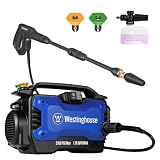
- BIG POWER. SMALL DESIGN: Delivers an impressive 2100 max PSI and 1.76 max GPM at lowest pressure, with 1800 rated PSI and 1.2 rated GPM so you're able to handle a range of tough jobs
- GRAB-AND-GO CLEANING: The ultra compact 10 pound electric pressure washer is easy to use, carry and store for everyday outdoor cleanups, wherever and whenever you find them
- ORGANIZED FOR EASY SETUP AND STORAGE: Built-in holders keep the spray gun, lance and standard spray nozzles together between jobs so it's always ready to grab and go
- SUPER SOAPER: The adjustable foam cannon lets you apply thick, clinging foam to loosen grease, grime and stains from cars, windows, decks and more
- GO GET THE GRIME: Enjoy extended reach with a 35 foot GFCI power cord and 20 foot high-pressure hose so you can walk and wash all around vehicles and outdoor spaces

- Delivers 3000 max PSI and 1.76 max GPM (at lowest pressure), and 2600 rated PSI and 1.1 rated GPM of water flow. Perfect for decks, sidewalks, fences, garage floors, exterior walls, cars and patio furniture; Comes with a .45 gallon soap tank
- 25′ abrasion resistant super-flex hose with lightweight high pressure metal spray gun and wand with 5 quick connect nozzles (0°, 15°, 25°, soap and turbo); Compatible with pressure washer accessories like surface cleaners, undercarriage cleaners and foam cannons with M22 fittings
- Heavy duty AC 120V electric motor and long-lasting, maintenance-free axial 3 piston auto-stop pump provides up to 1.76 gallons of water (and soap) a minute
- Rugged steel frame with high profile 10” never-flat wheels and 35’ GFCI cord provide easy transportation and maneuverability; Includes tools and quick start guide to get cleaning in minutes
- All Westinghouse pressure washers are functionally tested in the factory and are backed by 3-year limited manufacturer service, labor and parts coverage

- TRUBRUSHLESS MOTOR : Powerful 14 Amp TruBrushless motor generates 3000 PSI and 2.0 GPM for maximum cleaning power.Cleaning Units 3300 C.U. Maximum Inlet Water Temperature 104°F (40°C).
- All water pressure (PSI) and flow rate (GPM) claims for this product were tested and verified by an independent lab, ensuring you’ll take home the power you were promised
- JETTFLOW TECHNOLOGY : Delivers up to 50% more flow, reaching higher areas and quick power rinsing
- ACCESSORIES : Equipped with rugged metal gun and hassle-free 25-FT Uberflex kink-resistant hose; 15°, 25° and 40° tips, soap and turbo nozzles included

- Delivers 3400 max PSI and 2 max GPM (at lowest pressure), and 3000 rated PSI and 1.1 rated GPM of water flow; Perfect for decks, sidewalks, siding, fences, railings, garage floors, exterior walls, cars and patio furniture; Comes with a half gallon onboard soap tank
- 25′ abrasion resistant super-flex hose with lightweight high pressure metal spray gun and wand with 5 quick connect nozzles (0°, 15°, 25°, soap and turbo) - compatible with pressure washer accessories such as surface cleaners, undercarriage cleaners and foam cannons with M22 fittings
- Heavy duty AC 120V true brushless electric engine - long-lasting, maintenance-free axial 3 piston auto-stop pump provides up to 2 gallons of water (and soap) a minute
- Rugged steel frame with high profile 10” never flat wheels and 35’ GFCI cord provide easy transportation and maneuverability – includes tools and quick start guide to get cleaning in minutes
- All Westinghouse pressure washers are functionally tested in the factory and are backed by 3-year limited manufacturer service, labor and parts coverage

- Delivers 2300 max PSI and 1.76 max GPM (at lowest pressure), and 1900 rated PSI and 1.24 rated GPM of water flow; Pro-style steel extendable 17.5” wand with quick-connect nozzles (0°, 15°, 25°, turbo and soap applicator)
- Super compact and lightweight at 16.5” tall and 19 pounds for convenient storage and portability; Four quick-lock wheels with 360° steering design and low center of gravity engineered for anti-tipping design
- Easy-coil nylon braided 25' hose; 20 ounce onboard soap tank to add detergents/chemicals for heavy duty cleaning power on decks, driveways, garage floors, stairs, fencing, patio furniture and vehicles
- Pump automatically stops when trigger is not engaged to conserve energy and promote pump and motor life
- Backed by a 3-year limited service, labor and parts coverage with nationwide customer service and support network

- POWERFUL CLEANING PERFORMANCE: Powered by a 1600W motor, this electric pressure washer delivers up to 2465 PSI max pressure and 1.76 max flow rated to break through dirt, grime, and buildup with less cleaning time and effort
- VERSATILE CLEANING NOZZLES: Includes 4 quick-connect spray tips: 0°, 15°, 25°, and 40°, plus a 0.4L detergent bottle for added cleaning power. Ideal for washing vehicles, fences, gates, driveways, and concrete patios with eco-friendly soap that helps reduce filter clogging and supports longer machine life
- EXTENDED REACH DESIGN: The 20 ft high-pressure hose and 35 ft power cord give you plenty of reach around your cleaning area without constantly repositioning the unit. Two smooth-rolling wheels make it easy to move the washer while maintaining steady balance
- AUTOMATIC SHUTOFF SAFETY: The automatic On/Off function stops the motor when the spray trigger is released, helping reduce unnecessary operation. An integrated trigger safety lock also helps prevent unintended spraying during storage or when the washer is not in use
- CONVENIENT ACCESSORY STORAGE: Keep essential accessories close at hand with the built-in power cord hook and convenient accessory holder for storing the hose, spray nozzles, and cord. The compact design fits easily into a garage, utility area, or pantry when cleaning is finished

- Delivers 2100 max PSI and 1.76 max GPM (at lowest pressure), and 1800 rated PSI and 1.2 rated GPM of water flow.
- Super compact and lightweight at 18 pounds for convenient storage and portability; Built-in handle for easy transportation to wherever your cleaning tasks are
- Easy-coil nylon braided 20’ hose; Detachable foam cannon to add detergents or chemicals for heavy duty cleaning power on decks, driveways, garage floors, stairs, fencing, patio furniture and vehicles
- Pump automatically stops when trigger is not engaged to conserve energy and promote pump and motor life
- Backed by 3-year limited service, labor and parts coverage with nationwide customer service and support network

- TRUBRUSHLESS MOTOR : Powerful 14 Amp TruBrushless motor generates 3000 PSI and 2.0 GPM for maximum cleaning power.Cleaning Units 3300 C.U. Maximum Inlet Water Temperature 104°F (40°C).Frequency : 60 hz
- PWMA CERTIFIED (Pressure Washer Manufacturers‘ Association) : All water pressure (PSI) and flow rate (GPM) claims for this product were tested and verified by an independent lab, ensuring you’ll take home the power you were promised
- BETTER THAN GAS PERFORMANCE : Heavy duty cast aluminum axial cam pump provides better than gas performance
- JETTFLOW TECHNOLOGY : Delivers up to 50% more flow, reaching higher areas and quick power rinsing
- RUGGED DESIGN + ACCESSORIES : Equipped with rugged metal gun and hassle-free 25-FT Uberflex kink-resistant hose; 15°, 25° and 40° tips, plus soap and turbo nozzles included

- POWERFUL 13-AMP MOTOR — Delivers strong, consistent cleaning power to cut through dirt, grime, mud, and mildew on driveways, patios, decks, fences, vehicles, and more
- 4 QUICK-CONNECT NOZZLE TIPS INCLUDED — 0°, 15°, 25°, and 40° nozzles tailor your spray from a pinpoint jet to a wide, gentle fan for any cleaning task; nozzles store onboard for easy access
- ONBOARD DETERGENT SYSTEM — Includes a 13.53 oz foam bottle so you can apply pressure-washer-specific detergent directly through the spray wand for a deeper clean
- EXTENDED REACH — 20-ft hose and 35-ft GFCI-protected power cord give you plenty of range with fewer interruptions
- TOTAL STOP SYSTEM (TSS) — Automatically shuts off the motor when the trigger is released, reducing wear and conserving energy for a longer-lasting pump
Identifying Your Pressure Washer’s Electrical Appetite
Your pressure washer isn’t shy about what it needs. The information you seek is usually prominently displayed.
Consulting the Manufacturer’s Label
This is your first and most reliable source of information.
- Look for a sticker or plate on the motor housing, near the power cord, or in the owner’s manual.
- It will typically state the voltage (usually 120V), the amperage (e.g., 13 amps, 15 amps), and sometimes the wattage.
- Pay close attention to the maximum amperage draw, as pressure washers often have a higher startup current (inrush current) than their continuous operating current.
Estimating Amperage from Wattage (If Necessary)
If your label only provides wattage and voltage, you can easily calculate the amperage using the formula: Amps = Watts / Volts.
- For example, if your 1.2 GPM pressure washer is rated at 1500 watts and operates on 120 volts: 1500 W / 120 V = 12.5 Amps.
- Keep in mind that this is usually the continuous operating current. The “startup surge” can be significantly higher for a brief moment, which is why a circuit needs a little headroom.
What 1.2 GPM Tells You (And Doesn’t Tell You)
The “1.2 GPM” (gallons per minute) specification refers to the water flow rate, an important performance metric for a pressure washer. However, it doesn’t directly tell you anything about its electrical power consumption.
- A 1.2 GPM model could be anywhere from 13 amps to 18 amps, depending on its PSI (pounds per square inch) rating and the efficiency of its motor. Higher PSI at the same GPM generally means a more powerful (and thus more amperage-hungry) motor.
- Therefore, solely relying on the GPM rating to determine electrical needs is a mistake. Always check the label!
Understanding Household Circuits: 15 Amps vs. 20 Amps
Your home’s electrical system isn’t a one-size-fits-all setup. Different circuits are designed to handle different loads.
The Standard 15-Amp Circuit
Most general-purpose outlets in your home (e.g., in bedrooms, living rooms, and some kitchens) are connected to 15-amp circuits.
- These circuits are protected by a 15-amp circuit breaker in your electrical panel.
- A 15-amp circuit can safely deliver up to 15 amps of continuous current (though it’s best practice to aim for about 80% of capacity for sustained loads, which is 12 amps).
- Plugging in an appliance that continuously draws more than 12 amps, or frequently spikes over 15 amps (like some pressure washers), will likely trip the breaker.
The Robust 20-Amp Circuit
Designated for appliances that draw more power, 20-amp circuits are typically found in kitchens, laundry rooms, bathrooms, garages, and workshops.
- These circuits are protected by a 20-amp circuit breaker.
- They can safely deliver up to 20 amps of continuous current (or about 16 amps for sustained loads).
- Outlets on a 20-amp circuit are often easily identifiable by a small horizontal slot on one of the neutral blades, creating a “T” shape, although not all 20-amp outlets have this. The breaker itself will clearly state “20A.”
The “Dedicated” Aspect: Why It Matters
A “dedicated” circuit means that only one appliance is powered by that specific circuit.
- If your pressure washer is on a dedicated 20-amp circuit, it has the full 20 amps (or 16 amps for continuous use) at its disposal.
- If it’s on a shared circuit, other devices plugged into the same circuit will be drawing power simultaneously, reducing the available amperage for your pressure washer. This is a common reason for tripped breakers, even if the pressure washer’s draw is technically within the circuit’s limit. For example, if your 13-amp pressure washer is on a 20-amp circuit that’s also powering your garage lights and a radio, you could easily exceed 20 amps.
Does Your 1.2 GPM Pressure Washer Need a Dedicated 20-Amp Circuit?
Now, let’s get to the crux of the matter. The answer isn’t a simple “yes” or “no” for all 1.2 GPM models, and it depends on a few key factors.
The Amperage Draw is the Deciding Factor
The GPM rating is a performance spec, not an electrical spec. Your decision hinges entirely on the amperage rating of your specific 1.2 GPM pressure washer.
- If your pressure washer is rated 12 continuous amps or less: You might be able to operate it on a 15-amp general-purpose circuit, provided no other significant appliances are using that circuit. However, repeated tripping due to startup surge or shared loads is still a possibility. For optimal performance and safety, even these models benefit from a dedicated circuit if available.
- If your pressure washer is rated between 12 and 16 continuous amps: This is where a dedicated 20-amp circuit becomes highly recommended, if not outright necessary. On a 15-amp circuit, you’d almost certainly experience frequent breaker trips. Even on a shared 20-amp circuit, you’d need to ensure nothing else is drawing power.
- If your pressure washer is rated above 16 continuous amps: A dedicated 20-amp circuit is essential. Anything less will lead to constant breaker tripping and potential overheating of the circuit. While less common for 1.2 GPM models, some high-PSI versions could approach this.
The Startup Surge Consideration
Electric motors, like the one in your pressure washer, draw a significantly higher surge of current for a fraction of a second when they first start (the “inrush current”).
- This momentary spike can be 2-3 times the continuous running current.
- Even if your pressure washer is rated for 13 amps continuous, its startup surge could momentarily hit 26-39 amps.
- Circuit breakers are designed to tolerate brief overloads, but repeated or prolonged startup surges on an undersized circuit will cause them to trip. A 20-amp circuit provides more buffer for these surges.
Safety and Performance Implications
Using the wrong circuit for your pressure washer isn’t just an inconvenience; it can pose significant risks and performance issues.
- Circuit Breaker Trips: The most common and immediate symptom. Annoying and disruptive, it means you can’t get your work done.
- Overheating Wires: If a circuit is consistently overloaded, even without tripping immediately, the wiring in your walls can heat up. This is a serious fire hazard over time.
- Reduced Performance: When a motor isn’t getting adequate amperage, it can struggle, leading to lower pressure, inconsistent operation, and increased wear and tear on the motor itself.
- Damage to the Pressure Washer: Over time, operating on an undersized circuit can stress the motor and other electrical components, potentially shortening the life of your pressure washer.
- Voiding Warranty: Some manufacturers may specify the required circuit type, and using an inadequate circuit could void your warranty.
When considering the electrical requirements for a 1.2 gpm electric pressure washer, it’s essential to determine whether it needs a dedicated 20 amp circuit to operate efficiently. Many users often overlook the importance of proper electrical setup, which can lead to performance issues or even damage to the unit. For a deeper understanding of the capabilities and specifications of electric pressure washers, you can refer to a related article that discusses the ultimate cleaning power of the Stihl electric pressure washer. This resource provides valuable insights into the features and requirements of various models, helping you make an informed decision about your purchase. To learn more, visit this article.
Best Practices and Troubleshooting Tips
Even if you’ve correctly identified your pressure washer’s needs, there are still best practices to follow to ensure safe and efficient operation.
Always Use the Shortest, Heaviest Extension Cord Possible
If you must use an extension cord, it’s crucial to select the right one. This is non-negotiable for high-draw appliances.
- Gauge (AWG): The lower the gauge number, the thicker the wires, and the more current they can safely carry. For a pressure washer requiring a 20-amp circuit, you’ll need at least a 12-gauge cord (even better, 10-gauge) for distances up to 50 feet. Never use a 14-gauge or 16-gauge cord for a pressure washer!
- Length: The longer the cord, the more voltage drop occurs. Voltage drop means less power reaches your pressure washer, which can cause the motor to overwork and overheat. Keep it as short as absolutely necessary.
- Rating: Ensure the extension cord is rated for outdoor use (marked “W” or “SJOW,” “SJOOW”) and has a 3-prong grounded plug.
What to Do If Your Breaker Still Trips
Even with a dedicated 20-amp circuit, you might occasionally experience a tripped breaker.
- Check for Other Loads: Is anything else truly unplugged from that circuit? Sometimes an overlooked lamp or phone charger can be just enough to push it over the edge.
- Inspect Extension Cord: Is your extension cord correctly rated and in good condition? Kinks, damage, or an undersized cord can contribute to trips.
- Startup Technique: Some pressure washers can be sensitive. Try starting the washer with the trigger open (allowing water to flow) before closing it. This reduces the initial load on the motor.
- Water Supply: Ensure your water supply is adequate. A lack of water can cause the pump to work harder, putting additional strain on the motor.
- Internal Issue: If all else fails, and you’re confident in your electrical setup, there might be an internal issue with the pressure washer itself. Consult the manufacturer’s troubleshooting guide or a qualified repair technician.
When to Consider a Professional Electrician
If you consistently trip breakers on circuits you believe should be adequate, or if you don’t have suitable 20-amp outlets available where you need them, it’s time to call a professional.
- Installing a New Circuit: An electrician can safely install a new dedicated 20-amp (or even 30-amp if your future plans include heavier duty equipment) circuit in your garage or outdoor area. This involves adding a new breaker to your panel and running appropriate wiring to a new outlet.
- Assessing Existing Wiring: An electrician can inspect your current electrical panel and wiring to ensure it’s up to code and robust enough for your needs.
- Safety First: Dealing with home electrical systems is not a DIY project for the inexperienced. Incorrect wiring can lead to fires, electrocution, and damage to your home and appliances.
In conclusion, understanding your 1.2 GPM electric pressure washer’s true electrical demands is paramount for both its effective operation and your safety. While the GPM rating gives you a sense of its cleaning power, the amperage draw on its label is the crucial piece of information for determining its circuit requirements. Always lean towards a dedicated 20-amp circuit if your pressure washer draws more than 12 continuous amps, and never compromise on a heavy-duty, outdoor-rated extension cord. By treating your pressure washer with the electrical respect it deserves, you’ll enjoy years of grime-busting performance without any unwelcome surprises at the circuit breaker.
Leave a Reply