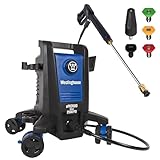
You are contemplating the purchase of a pressure washer, a tool designed to harness the power of pressurized water for cleaning a myriad of surfaces. While the sheer force of water can be immensely effective, indiscriminate application can lead to damage. This is where adjustable PSI (Pounds per Square Inch) controls become not just a desirable feature, but a critical one. Think of your pressure washer not as a blunt instrument, but as a finely tuned instrument, and the PSI control as its volume knob, allowing you to match the intensity of the spray to the delicacy or resilience of the surface you are cleaning.
The ability to modulate the pressure output of your washer is paramount to its versatility and your success in various cleaning tasks. Without this feature, you are essentially limited to a single mode of operation, which risks either insufficient cleaning power for tougher jobs or, more alarmingly, irreversible damage to sensitive materials.
Preventing Surface Damage
Imagine applying the full force of a waterfall to a delicate antique painting. While an exaggerated metaphor, it illustrates the principle. High PSI, while excellent for stripping paint from concrete or blasting grime from brickwork, can be devastating to less robust surfaces.
- Wood: Wooden decks, fences, and siding can be easily etched, gouged, or splintered by excessive pressure. Adjustable PSI allows you to use a gentle fan spray to lift surface dirt without compromising the integrity of the wood fibers.
- Automobiles: Car paint, clear coats, and delicate trim are highly susceptible to damage from high-pressure streams. A lower PSI setting, often combined with a wider spray pattern, is crucial for safely washing vehicles without causing costly cosmetic or structural harm.
- Soft Surfaces: Outdoor furniture cushions, intricate garden ornaments made of softer plastics or resins, and even some types of patio umbrellas require a light touch. Adjustable PSI ensures you can clean these without tearing, deforming, or fading them.
- Window Screens and Glass: The mesh of window screens can be easily torn, and concentrated high pressure can even shatter older or thinner panes of glass. A significantly reduced PSI is essential for these tasks.
Optimizing Cleaning Efficiency
Conversely, inadequate pressure can lead to frustratingly slow progress and an unsatisfactory clean. You wouldn’t use a feather duster to chip away at dried mud, and similarly, a low PSI setting will prove ineffective against hardened grime.
- Heavy Stains: For deeply embedded dirt, oil stains on concrete, or stubborn mildew, a higher PSI is a prerequisite. Adjustable controls allow you to dial up the power precisely when and where it’s needed, maximizing the cleaning force.
- Large Surface Areas: When cleaning expansive areas like driveways or large patios, the ability to increase PSI can reduce cleaning time considerably, as more powerful streams can cover ground more efficiently while still being directed effectively.
- Specialized Applications: Certain attachments, such as rotating brushes or surface cleaners, can benefit from specific pressure ranges to perform optimally. Adjustable PSI ensures compatibility and peak performance with these accessories.
If you’re looking to enhance your outdoor cleaning and cooking experiences, you might find it helpful to explore related topics. For instance, check out this informative article on The Ultimate Guide to Choosing the Best Propane Grills for Your Outdoor Cooking Adventures. It offers valuable insights into selecting the perfect grill to complement your pressure washing efforts, ensuring your outdoor space is not only clean but also equipped for delicious meals.
Types of Adjustable PSI Mechanisms
The method by which you adjust the pressure on a pressure washer can vary, influencing both the ease of use and the precision of control. Understanding these mechanisms will help you identify the most suitable model for your needs.
Nozzle-Based Adjustment
This is a common and often straightforward method of pressure regulation.
- Interchangeable Nozzles: Many pressure washers include a set of color-coded nozzles, each designed to deliver a specific spray pattern and, consequently, a specific pressure level. A red nozzle typically provides a zero-degree (pencil-point) stream with maximum pressure, while a white or black nozzle offers a wider fan spray at significantly lower pressure, suitable for soap application or delicate cleaning. You manually switch between these nozzles to change the pressure.
- Adjustable Nozzles: Some pressure washers feature a single, continually adjustable nozzle. By twisting or sliding a collar on the nozzle, you can transition seamlessly from a narrow, high-pressure stream to a broad, low-pressure fan. This offers more convenience than interchangeable nozzles as you don’t need to stop and switch components.
Pump-Based Adjustment
More advanced pressure washers, particularly professional-grade models, may offer direct control over the pump’s output pressure.
- Pressure Regulator Valve: These systems often incorporate a pressure regulator valve, sometimes with a gauge, allowing you to physically set the desired PSI. This provides a more precise and consistent pressure output, independent of nozzle selection, although the nozzle still dictates the spray pattern.
- Variable Speed Motors (Electric Models): In some electric pressure washers, the motor’s speed can be adjusted, which in turn alters the pump’s output pressure. This is less common in entry-level models but offers a sophisticated level of control.
- Engine RPM Control (Gas Models): For gasoline-powered pressure washers, adjusting the engine’s revolutions per minute (RPM) directly impacts the pump’s performance and thus the water pressure. This often comes in the form of a throttle lever, much like in an automobile.
Key Features to Consider Beyond PSI

While adjustable PSI is a central theme, a practical pressure washer has several other attributes that contribute to its overall utility and effectiveness.
Flow Rate (GPM)
Often overlooked in favor of PSI, the Gallons Per Minute (GPM) rating is equally, if not more, important for cleaning efficiency.
- Cleaning Power: Think of PSI as the “hitting force” and GPM as the “volume of water.” A high GPM allows you to move more dirt and debris away from the surface faster. A high PSI with a low GPM might chip away at grime, but a high PSI with a high GPM will blast it away and flush it out.
- Time Savings: Higher GPM translates to faster cleaning times, especially on larger projects. It’s the difference between trying to wash a car with a garden hose versus a fire hose – within the pressure washer context.
- Water Consumption: While higher GPM cleans faster, it also consumes more water. Consider your water source and environmental impact if this is a concern.
Horsepower (Electric) or Engine Size (Gas)
The power source dictates the overall capability and sustained performance of the pressure washer.
- Electric Models: Horsepower (HP) is the primary metric here. Higher HP typically correlates with higher PSI and GPM capabilities, though it’s important to cross-reference with the actual pressure and flow rate specifications. Electric models are generally quieter, require less maintenance, and produce no emissions, making them suitable for residential use and enclosed spaces. However, they are limited by the power cord’s length and the availability of an electrical outlet.
- Gas Models: Engine size (measured in CCs or cubic centimeters) is the indicator of power. Larger engines generally provide greater power, leading to higher PSI and GPM. Gas models offer greater mobility as they are not tethered to an electrical outlet and are typically more powerful than electric counterparts, making them ideal for heavier-duty, prolonged outdoor tasks. The trade-offs include more noise, exhaust emissions, and regular maintenance requirements (oil changes, spark plugs, etc.).
Detergent Injection Systems
For many cleaning tasks, water alone is insufficient. Detergents and soaps are often necessary to break down grease, oil, and organic growth.
- Siphon Tubes: Many entry-level pressure washers use a simple siphon tube that draws detergent from an external container (like a bucket) and mixes it with the low-pressure water stream. This is usually activated when a low-pressure black or white nozzle is used.
- Onboard Detergent Tanks: More convenient models integrate an onboard tank for detergent. This eliminates the need for an external bucket and simplifies the application process. Check the capacity of the tank – larger tanks mean fewer refills.
- Chemical Injectors: Some advanced models feature adjustable chemical injectors, allowing you to control the ratio of detergent to water. This is particularly useful for specific cleaning agents that require precise dilution. Note that most pressure washers are designed to apply detergent at low pressure to avoid damaging the pump seals.
Portability and Storage
The physical attributes of the pressure washer impact its usability and how easily you can transport and store it.
- Wheel Design: Larger, pneumatic (air-filled) wheels generally offer better maneuverability over uneven terrain, while smaller, solid wheels are suitable for paved surfaces.
- Handle Design: Foldable or retractable handles save space during storage and can make transportation easier. Ergonomic handles improve comfort during use.
- Hose Reel: An integrated hose reel is a significant convenience feature, preventing tangles and making coiling the hose simple and neat.
- Accessory Storage: Dedicated holders for nozzles, spray wands, and other accessories keep your equipment organized and readily accessible.
Maintenance Considerations for Longevity
A pressure washer, like any motorized tool, requires periodic maintenance to ensure its longevity and consistent performance. Ignoring these steps can lead to premature failure and costly repairs.
Pump Care
The pump is the heart of your pressure washer; its proper functioning is paramount.
- Winterization: If you live in a climate where temperatures drop below freezing, proper winterization is critical. Residual water in the pump can freeze, expand, and crack components. This typically involves flushing the pump with a pump saver solution or antifreeze.
- Regular Flushing: After each use, especially if you’ve used detergents, flush the system with clean water to prevent chemical buildup and corrosion.
- Oil Changes (Gas Models): For gas-powered pressure washers, consult your owner’s manual for recommended oil change intervals. Using the correct type and amount of oil is essential for the pump’s lubrication and cooling.
Hose and Nozzle Care
These components are typically subjected to high pressure and can degrade over time.
- Hose Inspection: Regularly inspect the high-pressure hose for kinks, cuts, bulges, or worn spots. A damaged hose can rupture under pressure, posing a safety hazard. Replace damaged hoses immediately.
- Nozzle Cleaning: Nozzles can become clogged with mineral deposits or debris, leading to inconsistent spray patterns or reduced pressure. Use the small wire tool often provided with your pressure washer to clear any blockages.
- Proper Storage: Store hoses neatly coiled, ideally on a reel, to prevent kinking and damage. Protect nozzles from dirt and impact.
Engine Maintenance (Gas Models)
The engine of a gas pressure washer requires similar attention to other small engines.
- Spark Plug Replacement: A fouled or worn spark plug can lead to difficult starting and inefficient engine operation. Replace it according to the manufacturer’s recommendations.
- Air Filter Cleaning/Replacement: A clean air filter is essential for proper engine combustion. Dust and debris can clog the filter, reducing engine power and potentially causing damage.
- Fuel Stabilizer: If you store your gas pressure washer for extended periods, use a fuel stabilizer to prevent fuel degradation, which can lead to carburetor issues and hard starting.
By carefully considering these factors – adjustable PSI as a foundational requirement, along with flow rate, power source, detergent systems, portability, and diligent maintenance – you can make an informed decision and select a pressure washer that will serve you effectively and reliably for years to come. Your investment will pay off in cleaner surfaces and the satisfaction of a job well done, without the collateral damage of a mismatched tool.




Leave a Reply