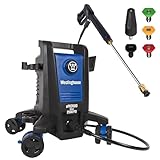
As a business owner, you constantly seek tools that enhance efficiency, improve productivity, and ultimately contribute to your bottom line. When it comes to maintaining a clean and professional appearance for your property, equipment, or fleet, a pressure washer is often an indispensable asset. However, the market offers a fundamental bifurcation in power sources: electric and gas. Each type presents distinct advantages and disadvantages, and a judicious selection is paramount to optimize your operational workflow and investment. This article will guide you through a comprehensive comparison, enabling you to make an informed decision tailored to your specific business needs.
Before delving into the technical specifications, it is crucial to conduct an internal audit of your business’s unique requirements. Your operational context acts as the compass guiding your decision. Ignoring this initial step is akin to buying a vehicle without knowing if you need it for city commutes or off-road expeditions.
Nature of Cleaning Tasks
The type and scale of your cleaning tasks are primary determinants. Will you be tackling light grime on exterior walls, or will you be stripping heavy deposits from industrial machinery?
- Light-Duty Applications: For tasks such as cleaning storefronts, patio furniture, or small vehicle fleets, a less powerful machine may suffice. These tasks often involve surface-level dirt and require a gentler touch.
- Medium-Duty Applications: Cleaning driveways, sidewalks, medium-sized equipment, or commercial kitchens falls into this category. These require more substantial cleaning power to remove embedded dirt and stains.
- Heavy-Duty Applications: Industrial-grade cleaning, such as preparing surfaces for painting, removing graffiti, or deep cleaning large construction equipment, demands considerable force. These tasks often involve stubborn contaminants and extensive surface areas.
Frequency and Duration of Use
How often will you be employing the pressure washer, and for how long will each cleaning session last?
- Intermittent Use: If you envision using the pressure washer sporadically, perhaps once a week or monthly for short periods, durability and initial cost might weigh differently than for continuous use.
- Frequent or Continuous Use: Businesses that rely on pressure washing as a core service, or those with extensive premises requiring regular cleaning, need a machine built for endurance and sustained performance. Repeated short cycles or intermittent use can stress components if the machine isn’t designed for it.
Mobility and Location Considerations
Where will the cleaning primarily take place? Will the pressure washer remain stationary, or will it be frequently moved across different sites?
- Stationary Applications: For fixed cleaning stations, such as vehicle wash bays or dedicated workshop areas, mobility might be a secondary concern. Proximity to power outlets becomes a non-issue for electric models.
- Mobile Applications: If your business model involves on-site services, such as mobile detailing or contract cleaning, portability and self-sufficiency are paramount. The ability to operate independently of a consistent power source is a significant advantage.
When considering the best options for pressure washing in a business setting, it’s essential to weigh the pros and cons of electric versus gas pressure washers. For a deeper understanding of the various methods available for power washing, you can refer to a related article that discusses which method is best for your home. This article provides valuable insights that can also be applicable to commercial use. To read more, visit this link.
Electric Pressure Washers: The Quiet Contender
Electric pressure washers are often seen as the more accessible entry point into the world of high-pressure cleaning. They are characterized by their simplicity of operation and lower immediate overhead. Think of them as the precise electric drill in your toolbox – reliable for most jobs, especially when power is conveniently available.
Advantages of Electric Models
You’ll discover several compelling reasons to consider an electric pressure washer for your business.
- Lower Initial Cost: Generally, electric models are less expensive to purchase than their gas-powered counterparts. This can be a significant factor for businesses managing tight budgets or those just establishing their cleaning operations.
- Reduced Noise Levels: Operating an electric pressure washer is significantly quieter. This is a substantial advantage in residential areas, noise-sensitive commercial environments (e.g., healthcare facilities, office complexes), or during extended cleaning sessions where operator fatigue from noise can be an issue.
- Zero Emissions: Electric pressure washers produce no exhaust fumes, making them suitable for indoor use in well-ventilated areas, such as workshops, warehouses, and food processing plants, where air quality is a concern. You avoid the carbon monoxide risks associated with internal combustion engines.
- Lower Maintenance: With fewer moving parts (no engine oil changes, spark plugs, or fuel filters), electric models typically require less maintenance. This translates to lower ongoing operational costs and less downtime.
- Ease of Use: Electric pressure washers are generally lighter and easier to maneuver. Starting them is as simple as plugging them in and pressing a switch. There’s no need to deal with fuel mixing, priming, or pull-starts.
Disadvantages of Electric Models
However, the electric contender also has its limitations that you must acknowledge.
- Limited Power Output: Electric models typically offer lower Pounds per Square Inch (PSI) and Gallons Per Minute (GPM) ratings compared to gas models. While sufficient for many light to medium-duty tasks, they may struggle with heavy-duty cleaning or embedded grime. Consider this a limitation in tackling truly Herculean tasks.
- Reliance on Power Outlet: You are tethered to an electrical outlet. This restricts your operational range and can be problematic in areas without readily available power, such as remote job sites or large outdoor properties. Power cord length also becomes a logistical consideration.
- Potential for Electrical Hazards: Working with water and electricity inherently presents risks. You must be diligent about using GFCI-protected outlets, avoiding frayed cords, and ensuring dry operating conditions to prevent electrical shocks.
- Motor Burnout Risk: Prolonged continuous use, especially with underpowered consumer-grade models, can lead to motor overheating and premature failure. Commercial-grade electric units are designed for more endurance, but even then, thermal protection is critical.
Gas Pressure Washers: The Untamed Workhorse

Gas pressure washers are the muscular option, often favored for their raw power and independence from external electrical sources. They are the heavy-duty utility vehicles of the cleaning world, capable of tackling the most demanding tasks with formidable force.
Advantages of Gas Models
When significant cleaning power and autonomy are priorities, you’ll find gas models highly appealing.
- Superior Power Output: Gas pressure washers boast significantly higher PSI and GPM ratings. This translates to faster and more effective cleaning for tough jobs, rapidly cutting through stubborn dirt, grease, paint, and grime. They are the undisputed champions when it comes to sheer force.
- Enhanced Mobility and Portability: Free from the constraints of power cords, gas models offer unparalleled mobility. You can take them to any location where you can transport fuel, making them ideal for remote job sites, large properties, construction sites, and mobile cleaning services.
- Durability for Heavy Use: Commercial and industrial-grade gas pressure washers are built with robust, heavy-duty components designed for prolonged and continuous operation. Their engines are often designed for thousands of hours of use, making them a long-term investment for demanding applications.
- Wider Range of Applications: With their increased power, gas models can handle a broader spectrum of cleaning tasks, from surface preparation and graffiti removal to deep cleaning large vehicles and machinery. They offer versatility that electric models often cannot match.
Disadvantages of Gas Models
However, this raw power comes with its own set of trade-offs and considerations you must carefully weigh.
- Higher Initial Cost: Gas pressure washers are generally more expensive to purchase than electric models, especially professional and commercial-grade units. This higher upfront investment needs to be justifiable by your business’s return on investment.
- Increased Noise and Emissions: The internal combustion engine produces significant noise and exhaust fumes. This can be problematic in noise-sensitive areas, residential zones, or enclosed spaces where ventilation is limited. Compliance with local noise ordinances may be a factor.
- More Maintenance Requirements: Gas engines demand regular maintenance, including oil changes, spark plug replacements, air filter cleaning/replacement, and fuel system care. This adds to operational costs and requires more diligent attention from your team.
- Fuel Storage and Handling: You need to manage and store gasoline safely, which involves adherence to fire safety regulations and proper ventilation. Spills and the pungent odor of fuel are also considerations.
- Starting Difficulty: Unlike electric models, gas pressure washers sometimes require pull-starting, which can be challenging, especially for less experienced operators or in cold weather. Modern models often feature electric starts, but these add to the cost.
Key Technical Specifications to Consider

Beyond the power source, several technical specifications will influence a pressure washer’s performance and suitability for your business. Understanding these metrics is crucial in evaluating potential candidates.
Pounds per Square Inch (PSI)
PSI measures the force of the water stream. Higher PSI means greater cleaning power, enabling you to tackle more stubborn dirt and grime.
- 1300-1900 PSI (Electric Light-Duty): Suitable for light cleaning of vehicles, patio furniture, and exterior siding.
- 2000-2800 PSI (Electric Medium-Duty / Gas Light-Duty): Effective for decks, fences, driveways, and general household/light commercial cleaning.
- 2900-4000+ PSI (Gas Medium- to Heavy-Duty): Ideal for commercial applications, paint stripping, concrete cleaning, and industrial equipment.
Gallons Per Minute (GPM)
GPM measures the volume of water flowing through the nozzle per minute. A higher GPM allows for faster rinsing and covers a larger surface area more quickly, increasing efficiency. It’s often overlooked but is arguably as important as PSI for overall cleaning speed. Think of PSI as the “fist” hitting the dirt, and GPM as the “hand” sweeping it away.
- 1.0-1.5 GPM (Electric Light-Duty): Adequate for smaller cleaning tasks where speed isn’t the primary concern.
- 1.6-2.5 GPM (Electric Medium-Duty / Gas Light-Duty): Decent for general cleaning, offering a balance of power and efficiency.
- 2.6-4.0+ GPM (Gas Medium- to Heavy-Duty): Essential for commercial and industrial applications where large areas need to be cleaned efficiently and quickly.
Cleaning Units (CU)
Sometimes referred to as Cleaning Power (CP), this metric combines PSI and GPM (PSI x GPM = CU) to provide a more comprehensive measure of a pressure washer’s overall cleaning capability. A higher CU indicates greater effectiveness. When comparing models, prioritize the CU value for a holistic understanding of their true power.
Nozzle Types
The type of nozzle significantly alters the spray pattern and intensity. Different applications demand different nozzles.
- 0-Degree (Red): A highly concentrated, pencil-thin stream for
intensive spot cleaning or removing extremely stubborn stains. Use with extreme caution as it can damage surfaces.
- 15-Degree (Yellow): A narrower, fan-shaped spray for intense cleaning on hard, durable surfaces like concrete or metal.
- 25-Degree (Green): A wider, fan-shaped spray suitable for general cleaning on most surfaces, including wood and brick.
- 40-Degree (White): The widest, gentlest fan spray, ideal for delicate surfaces like vehicles, vinyl siding, and windows.
- Soap/Low-Pressure (Black): Used for applying detergents or for very light rinsing, typically operating at a reduced pressure.
- Turbo Nozzle: Rotates a 0-degree stream in a circular motion, mimicking a wider spray pattern but with the aggressive impact of a narrow jet, drastically improving cleaning speed for tough grime on durable surfaces.
When considering the best options for pressure washing in a business setting, it’s essential to weigh the benefits of electric versus gas models. Each type has its advantages depending on the specific needs of your operations, such as portability and power. For those looking to enhance their overall maintenance practices, you might find it helpful to read about safe storage and upkeep in this related article on power tool maintenance. Understanding how to care for your equipment can significantly impact its longevity and performance, making it a valuable resource for any business owner.
Making the Final Decision
| Feature | Electric Pressure Washers | Gas Pressure Washers |
|---|---|---|
| Power Source | Electricity (corded or battery) | Gasoline engine |
| Pressure Output (PSI) | 1200 – 2000 PSI | 2000 – 4000 PSI |
| Water Flow Rate (GPM) | 1.2 – 1.8 GPM | 2.0 – 4.0 GPM |
| Portability | Lightweight, easy to move | Heavier, requires more effort to transport |
| Noise Level | Quieter (around 60-70 dB) | Louder (around 90-100 dB) |
| Maintenance | Low maintenance, no oil changes | Higher maintenance, requires oil and fuel checks |
| Operating Cost | Lower (electricity cost) | Higher (fuel and maintenance costs) |
| Environmental Impact | Eco-friendly, no emissions | Emits exhaust gases |
| Ideal Use Cases | Light to medium cleaning tasks, indoor or residential use | Heavy-duty cleaning, commercial and industrial use |
| Initial Cost | Generally lower | Generally higher |
Ultimately, your choice boils down to a careful weighing of all the factors discussed. There is no universally “best” option; only the best option for your business.
Scenario-Based Selection
Consider these typical business scenarios to guide your choice:
- Small Business, Occasional Cleaning (e.g., small restaurant, boutique shop): An electric pressure washer (1800-2200 PSI, 1.4-1.6 GPM) is likely sufficient for cleaning facades, patios, and light equipment. The lower cost and ease of use are major advantages.
- Mobile Detailing or Fleet Washing: A gas pressure washer (2500-3500 PSI, 2.0-3.0 GPM) offers the necessary power and mobility to service vehicles on-site, away from constant power sources. Hot water options can be a game-changer here.
- Contract Cleaning Services (residential & commercial): A versatile gas pressure washer (3000-4000 PSI, 2.5-4.0 GPM) is often preferred due to its power, efficiency, and ability to handle a wide array of client needs, from delicate patio cleaning to tough concrete restoration.
- Industrial Applications (e.g., manufacturing, construction): Heavy-duty gas pressure washers (3500-4500+ PSI, 3.0-5.0+ GPM) are indispensable. Durability, continuous operation capability, and occasionally hot water functionality are critical.
- Hospitality or Food Service (indoor/outdoor): An electric pressure washer (1800-2500 PSI, 1.6-2.0 GPM) is often chosen for its quiet operation and lack of emissions, particularly for indoor kitchen or dining area cleaning, while still offering enough power for outdoor patios.
Budget and Long-Term Costs
Beyond the initial purchase price, factor in the ongoing costs. For electric models, electricity consumption is generally low. For gas models, fuel consumption and more frequent maintenance are significant considerations. Calculate the total cost of ownership over the expected lifespan of the unit. A higher initial investment in a robust commercial-grade machine, whether gas or electric, often pays dividends in reduced downtime and repair costs over the long run.
Accessories and Attachments
Both electric and gas pressure washers benefit from a range of accessories that can expand their utility. Consider items such as:
- Surface Cleaners: For quickly and evenly cleaning large flat areas like driveways and patios, preventing zebra stripes.
- Extension Wands: To reach high places or clean under vehicles without stooping.
- Degreasers and Cleaning Solutions: Specialized detergents formulated for various cleaning challenges.
- Rotating Brushes: For gentle but effective cleaning of delicate surfaces.
- Hose Reels: For convenient storage and deployment of high-pressure hoses.
The selection of the right pressure washer is a strategic decision for your business. By thoroughly assessing your cleaning needs, understanding the core differences between electric and gas models, and scrutinizing key technical specifications, you can choose a tool that not only meets your immediate requirements but also contributes to the long-term efficiency and professionalism of your operations. Treat this purchase as an investment in your business’s image and operational capabilities, and you will be well on your way to a cleaner, more productive future.




Leave a Reply