You’ve just pulled out your trusty electric pressure washer, ready to blast away the grime from your patio, deck, or car. You press the power button, hear a hopeful hum, and then… silence. Or perhaps it sputters to life, revs up, and then dies just as quickly. The frustration is palpable. Don’t worry, you’re not alone. Many pressure washer owners encounter the annoying “on and off” phenomenon, and more often than not, it’s a problem you can diagnose and fix yourself. This comprehensive guide will walk you through the common culprits and their solutions, empowering you to get your pressure washer back to its grime-fighting glory.
Before you dive into troubleshooting, it’s helpful to understand the basic operation of your electric pressure washer. Knowledge is power, after all, and knowing how it should work will help you pinpoint where things are going wrong.
The Power Cycle Explained
- Initial Power-Up: When you plug in your electric pressure washer and press the power switch, electricity flows to the motor.
- Motor Activation: The electric motor begins to spin, and this motion drives the pump.
- Pump Suction: The pump draws water from your garden hose. It’s crucial that there’s a free and steady supply of water.
- Pressure Build-Up: Inside the pump, pistons or plungers compress the water, increasing its pressure significantly.
- Trigger Valve: When you squeeze the trigger on your spray gun, it opens a valve, allowing the high-pressure water to exit through the nozzle.
- Total Stop System (TSS): Most modern electric pressure washers are equipped with a Total Stop System (TSS). This is a vital safety and efficiency feature. When you release the trigger, the TSS detects the pressure build-up and automatically shuts off the motor. This prevents the pump from running constantly under pressure, reducing wear and tear, and saving electricity. When you squeeze the trigger again, the TSS senses the pressure drop and restarts the motor.

- Delivers 2500 max PSI and 1.76 max GPM (at lowest pressure), and 2000 rated PSI and 1.2 rated GPM of water flow; Pro-style steel extendable 17.5” wand with quick-connect nozzles (0°, 15°, 25°, turbo and soap applicator)
- Super compact and lightweight at 16.5” tall and 19 pounds for convenient storage and portability; Four quick-lock wheels with 360° steering design and low center of gravity engineered for anti-tipping design
- Easy-coil nylon braided 25' hose; 20 ounce onboard soap tank to add detergents/chemicals for heavy duty cleaning power on decks, driveways, garage floors, stairs, fencing, patio furniture and vehicles
- Pump automatically stops when trigger is not engaged to conserve energy and promote pump and motor life
- Backed by a 3-Year limited service, labor and parts coverage with nationwide customer service and support network


- HIGH PRESSURE WASHER: LWQ power washer with deep cleaning high pressure up to 2.5 GPM of water flow. It's saving water and energy, it also ensures high cleaning efficiency and the ability to clean objects with complex shapes and structures, which makes it ideal for cleaning various surfaces in your home, such as driveways, patio furniture, and cars.
- MULTI-PURPOSE USE: Equipped with 4 quick-connect metal spray nozzles (water-pressure strength:0°>15°> 25°> 40°) and a foam cannon, the LWQ pressure washer is easy to clean objects with complex shapes and structures. The detergent bottle can be filled with chemicals such as bleach, the cleaner will not pass through the pump.
- CONVENIENT TO USE: LWQ Pressure Washer designs of 2 rollers for easy movement and operation, while the bottom of the body adds an anti-tipping design for overall stability when not in motion. Simple assembly + dual-roller design + anti-tipping base + faucet/bucket water collection system - making it more convenient to use anywhere.
- EASY TO STORAGE: With power cord hook and nozzle holders, it is easy to access or to store in a garage/pantry after use. In addition, its compact design for easy to store in a garage or pantry when not in use. The LWQ pressure washer is perfect for cleaning concrete, pavement, driveways, patios, decks, sidewalks, RVs, cars, boats, homes, fencing, and more.
- USER-FRIENDLY & SAFETY: The LWQ pressure washer using high-pressure water flow to clean up the dirt, for saving water and energy and ensuring high cleaning efficiency. Tip: Before turning on the pressure washer, exhaust the air in the high pressure hose as well as the inlet hose, this will ensure that the machine can spray high pressure water stream properly.
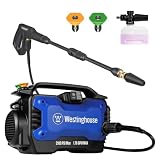
- BIG POWER. SMALL DESIGN: Delivers an impressive 2100 max PSI and 1.76 max GPM at lowest pressure, with 1800 rated PSI and 1.2 rated GPM so you're able to handle a range of tough jobs
- GRAB-AND-GO CLEANING: The ultra compact 10 pound electric pressure washer is easy to use, carry and store for everyday outdoor cleanups, wherever and whenever you find them
- ORGANIZED FOR EASY SETUP AND STORAGE: Built-in holders keep the spray gun, lance and standard spray nozzles together between jobs so it's always ready to grab and go
- SUPER SOAPER: The adjustable foam cannon lets you apply thick, clinging foam to loosen grease, grime and stains from cars, windows, decks and more
- GO GET THE GRIME: Enjoy extended reach with a 35 foot GFCI power cord and 20 foot high-pressure hose so you can walk and wash all around vehicles and outdoor spaces

- Delivers 3000 max PSI and 1.76 max GPM (at lowest pressure), and 2600 rated PSI and 1.1 rated GPM of water flow. Perfect for decks, sidewalks, fences, garage floors, exterior walls, cars and patio furniture; Comes with a .45 gallon soap tank
- 25′ abrasion resistant super-flex hose with lightweight high pressure metal spray gun and wand with 5 quick connect nozzles (0°, 15°, 25°, soap and turbo); Compatible with pressure washer accessories like surface cleaners, undercarriage cleaners and foam cannons with M22 fittings
- Heavy duty AC 120V electric motor and long-lasting, maintenance-free axial 3 piston auto-stop pump provides up to 1.76 gallons of water (and soap) a minute
- Rugged steel frame with high profile 10” never-flat wheels and 35’ GFCI cord provide easy transportation and maneuverability; Includes tools and quick start guide to get cleaning in minutes
- All Westinghouse pressure washers are functionally tested in the factory and are backed by 3-year limited manufacturer service, labor and parts coverage

- TRUBRUSHLESS MOTOR : Powerful 14 Amp TruBrushless motor generates 3000 PSI and 2.0 GPM for maximum cleaning power.Cleaning Units 3300 C.U. Maximum Inlet Water Temperature 104°F (40°C).
- All water pressure (PSI) and flow rate (GPM) claims for this product were tested and verified by an independent lab, ensuring you’ll take home the power you were promised
- JETTFLOW TECHNOLOGY : Delivers up to 50% more flow, reaching higher areas and quick power rinsing
- ACCESSORIES : Equipped with rugged metal gun and hassle-free 25-FT Uberflex kink-resistant hose; 15°, 25° and 40° tips, soap and turbo nozzles included

- Delivers 2300 max PSI and 1.76 max GPM (at lowest pressure), and 1900 rated PSI and 1.24 rated GPM of water flow; Pro-style steel extendable 17.5” wand with quick-connect nozzles (0°, 15°, 25°, turbo and soap applicator)
- Super compact and lightweight at 16.5” tall and 19 pounds for convenient storage and portability; Four quick-lock wheels with 360° steering design and low center of gravity engineered for anti-tipping design
- Easy-coil nylon braided 25' hose; 20 ounce onboard soap tank to add detergents/chemicals for heavy duty cleaning power on decks, driveways, garage floors, stairs, fencing, patio furniture and vehicles
- Pump automatically stops when trigger is not engaged to conserve energy and promote pump and motor life
- Backed by a 3-year limited service, labor and parts coverage with nationwide customer service and support network

- POWERFUL CLEANING PERFORMANCE: Powered by a 1600W motor, this electric pressure washer delivers up to 2465 PSI max pressure and 1.76 max flow rated to break through dirt, grime, and buildup with less cleaning time and effort
- VERSATILE CLEANING NOZZLES: Includes 4 quick-connect spray tips: 0°, 15°, 25°, and 40°, plus a 0.4L detergent bottle for added cleaning power. Ideal for washing vehicles, fences, gates, driveways, and concrete patios with eco-friendly soap that helps reduce filter clogging and supports longer machine life
- EXTENDED REACH DESIGN: The 20 ft high-pressure hose and 35 ft power cord give you plenty of reach around your cleaning area without constantly repositioning the unit. Two smooth-rolling wheels make it easy to move the washer while maintaining steady balance
- AUTOMATIC SHUTOFF SAFETY: The automatic On/Off function stops the motor when the spray trigger is released, helping reduce unnecessary operation. An integrated trigger safety lock also helps prevent unintended spraying during storage or when the washer is not in use
- CONVENIENT ACCESSORY STORAGE: Keep essential accessories close at hand with the built-in power cord hook and convenient accessory holder for storing the hose, spray nozzles, and cord. The compact design fits easily into a garage, utility area, or pantry when cleaning is finished

- Delivers 2100 max PSI and 1.76 max GPM (at lowest pressure), and 1800 rated PSI and 1.2 rated GPM of water flow.
- Super compact and lightweight at 18 pounds for convenient storage and portability; Built-in handle for easy transportation to wherever your cleaning tasks are
- Easy-coil nylon braided 20’ hose; Detachable foam cannon to add detergents or chemicals for heavy duty cleaning power on decks, driveways, garage floors, stairs, fencing, patio furniture and vehicles
- Pump automatically stops when trigger is not engaged to conserve energy and promote pump and motor life
- Backed by 3-year limited service, labor and parts coverage with nationwide customer service and support network

- Delivers 3400 max PSI and 2 max GPM (at lowest pressure), and 3000 rated PSI and 1.1 rated GPM of water flow; Perfect for decks, sidewalks, siding, fences, railings, garage floors, exterior walls, cars and patio furniture; Comes with a half gallon onboard soap tank
- 25′ abrasion resistant super-flex hose with lightweight high pressure metal spray gun and wand with 5 quick connect nozzles (0°, 15°, 25°, soap and turbo) - compatible with pressure washer accessories such as surface cleaners, undercarriage cleaners and foam cannons with M22 fittings
- Heavy duty AC 120V true brushless electric engine - long-lasting, maintenance-free axial 3 piston auto-stop pump provides up to 2 gallons of water (and soap) a minute
- Rugged steel frame with high profile 10” never flat wheels and 35’ GFCI cord provide easy transportation and maneuverability – includes tools and quick start guide to get cleaning in minutes
- All Westinghouse pressure washers are functionally tested in the factory and are backed by 3-year limited manufacturer service, labor and parts coverage

- TRUBRUSHLESS MOTOR : Powerful 14 Amp TruBrushless motor generates 3000 PSI and 2.0 GPM for maximum cleaning power.Cleaning Units 3300 C.U. Maximum Inlet Water Temperature 104°F (40°C).Frequency : 60 hz
- PWMA CERTIFIED (Pressure Washer Manufacturers‘ Association) : All water pressure (PSI) and flow rate (GPM) claims for this product were tested and verified by an independent lab, ensuring you’ll take home the power you were promised
- BETTER THAN GAS PERFORMANCE : Heavy duty cast aluminum axial cam pump provides better than gas performance
- JETTFLOW TECHNOLOGY : Delivers up to 50% more flow, reaching higher areas and quick power rinsing
- RUGGED DESIGN + ACCESSORIES : Equipped with rugged metal gun and hassle-free 25-FT Uberflex kink-resistant hose; 15°, 25° and 40° tips, plus soap and turbo nozzles included
Common Malfunctions Leading to On/Off Issues
With the TSS in mind, you can already begin to see how a malfunction in the system could lead to your pressure washer cycling on and off. If the TSS is overly sensitive, faulty, or if there’s an issue causing a rapid pressure drop or surge, it can trick the system into continually turning the motor on and off.
If you’re experiencing issues with your electric pressure washer turning on and off unexpectedly, you might find it helpful to explore related topics that can enhance your cleaning experience. One such article is titled “Top Home DIY Cleaning Projects for a Better Home Exterior,” which offers valuable insights into various cleaning techniques and projects that can complement your pressure washing efforts. You can read the article here: Top Home DIY Cleaning Projects for a Better Home Exterior.
Power Supply Problems: The First Checkpoint
You wouldn’t believe how often the fix for an intermittent pressure washer is something as simple as a faulty power connection. Before you start dismantling anything, always begin with the power supply.
Inspecting the Electrical Outlet
- Dedicated Circuit: Is your pressure washer plugged into a dedicated outdoor or garage outlet? High-powered appliances like pressure washers draw a significant amount of current. Sharing an outlet with other appliances can overload the circuit and cause the breaker to trip, leading to intermittent power.
- GFCI Tripped: Most outdoor outlets are equipped with a Ground Fault Circuit Interrupter (GFCI) for your safety. If the GFCI detects a sudden surge in electricity or a short circuit, it will trip to prevent electrical shock. Look for a “Reset” button on the outlet itself. If it has tripped, press it firmly. If it trips immediately again, you have a more serious electrical issue that needs professional attention.
- Corrosion or Damage: Visually inspect the outlet for any signs of corrosion, charring, or physical damage. A compromised outlet might not provide a consistent power supply.
Examining the Extension Cord (If Used)
- Gauge and Length: If you’re using an extension cord, ensure it’s rated for outdoor use and has the correct wire gauge for your pressure washer’s power requirements. An undersized or excessively long extension cord can cause a voltage drop, leading to the motor struggling or cycling off. Refer to your pressure washer’s manual for recommended extension cord specifications. Generally, a 12-gauge cord is recommended for most electric pressure washers, especially for longer runs.
- Damage Check: Inspect the entire length of the extension cord for cuts, nicks, frayed wires, or crushed sections. Even minor damage can create an intermittent connection.
- Secure Connections: Ensure the extension cord is fully plugged into the outlet and that your pressure washer’s cord is securely plugged into the extension cord. Loose connections can lead to power interruptions.
The Pressure Washer’s Power Cord and Switch
- Frayed Wires: Carefully inspect your pressure washer’s power cord for any visible damage, such as cuts, fraying, or exposed wires. A damaged cord is not only a potential cause of on/off issues but also a significant safety hazard.
- Switch Malfunction: Although less common, the on/off switch itself can sometimes fail. If the switch feels loose, sticky, or doesn’t provide a firm “click” when engaged, it might be faulty. Trying to bypass the switch for testing is not recommended due to electrical safety risks. If you suspect the switch, consult a professional or your pressure washer’s service manual.
Water Supply Woes: The Silent Saboteur

Your electric pressure washer relies heavily on a consistent and robust water supply. Even brief interruptions or insufficient flow can trigger the Total Stop System, leading to the motor cycling on and off.
Garden Hose Inspection
- Kinks and Bends: This is a surprisingly common culprit. Walk the entire length of your garden hose from the spigot to the pressure washer, untangling any kinks or sharp bends. These can severely restrict water flow.
- Hose Diameter: Similar to extension cords, hose diameter matters. An undersized garden hose (e.g., a very thin, flexible hose not designed for consistent flow) might not supply enough water for your pressure washer. Most pressure washers perform best with a standard 5/8-inch or 3/4-inch garden hose.
- Damage or Leaks: Check your garden hose for any leaks. Even small drips can indicate a hose losing pressure, which can affect the pressure washer’s performance.
Water Spigot/Faucet Issues
- Fully Open: Ensure the water spigot or faucet your garden hose is connected to is fully open. You’d be surprised how often it’s left partially closed.
- Water Pressure: Is your home’s water pressure sufficient? If your overall household water pressure is low, your pressure washer might struggle. You can test this by running another faucet to see if the flow is weak.
- Sediment Build-up: Over time, sediment can build up in older spigots, restricting water flow. You might need to remove an aerator (if present) or flush the spigot to clear any blockages.
Inlet Filter/Screen Obstruction
- Location: Most electric pressure washers have a small mesh filter or screen at the water inlet where the garden hose connects. This filter is designed to prevent debris from entering and damaging the pump.
- Cleaning: Disconnect the garden hose and carefully remove this filter. You can usually pry it out with a small screwdriver or needle-nose pliers. Rinse it thoroughly under running water to remove any accumulated grit, sand, or rust particles. Reinsert it securely. A clogged inlet filter is one of the most frequent causes of sporadic operation.
Nozzle and Spray Gun Problems: The Delivery End

The high-pressure water exits your pressure washer system through the nozzle. If there’s an issue here, it can cause immediate back pressure or disrupt the flow, triggering your TSS.
Clogged Nozzle
- Debris: Small particles of grit, scale, or even mineral deposits from hard water can get lodged in the tiny opening of your nozzle. This creates a blockage and can disrupt the consistent flow of high-pressure water.
- Cleaning: Most pressure washers come with a small nozzle cleaning tool (a thin wire or needle-like device). If you don’t have one, a paperclip can often work. Gently insert the tool into the nozzle opening from the tip to dislodge any blockage. Always do this with the pressure washer OFF and disconnected from the water supply.
- Nozzle Wear: Over time, the nozzle opening can wear down or become misshapen, affecting the spray pattern and pressure. If cleaning doesn’t help and your nozzle looks visibly deformed, it might be time for a replacement.
Leaking Spray Gun or Wand
- O-Rings: The spray gun and wand assembly have O-rings at various connection points. These rubber rings create a tight seal. If an O-ring is cracked, worn, or missing, water can leak out, causing a drop in pressure and potentially triggering the TSS.
- Tightening Connections: First, ensure all connections on your spray gun and wand are tightened securely. Loose connections are often the simplest leak fix.
- Replacing O-Rings: If you spot a leak, identify the O-ring causing it and replace it with a new one of the correct size. Many pressure washer repair kits include assorted O-rings.
Internal Trigger Valve Malfunction
- Sticking Valve: Inside the spray gun, there’s a trigger valve that opens and closes the water flow. If this valve becomes sticky or blocked with debris, it might not open or close fully, leading to inconsistent pressure and the motor cycling on and off.
- Professional Help: Disassembling a spray gun can be tricky, and some components are not user-serviceable. If you suspect an internal spray gun issue and basic troubleshooting hasn’t helped, it’s often more practical to replace the entire spray gun assembly.
If you’re experiencing issues with your electric pressure washer turning on and off unexpectedly, you might find it helpful to explore some troubleshooting tips. A related article that provides valuable insights is the review of the Sun Joe SPX3000, which discusses its features and performance. You can read more about it by following this link. Understanding the common problems and solutions can help you get your pressure washer back in working order.
Internal Component Failures: When Things Get Serious
| Issue | Possible Causes | Solutions |
|---|---|---|
| Electric Pressure Washer Keeps Turning On and Off | 1. Overheating 2. Low water pressure 3. Faulty pressure switch 4. Electrical issues |
1. Allow the washer to cool down 2. Check water supply and clean inlet filter 3. Replace pressure switch if necessary 4. Check power source and connections |
If you’ve exhaustively checked all the external factors and your pressure washer is still acting up, the problem likely lies within its internal components. These issues are often more complex and may require some mechanical aptitude or professional assistance.
Faulty Total Stop System (TSS)
- Pressure Sensor/Switch: The TSS relies on a pressure sensor or switch to detect when the trigger is released and the pressure builds. If this sensor is faulty, it might incorrectly register pressure changes, causing the motor to cycle on and off erratically.
- Electronic Board: In more advanced models, the TSS might be integrated into an electronic control board. A malfunction on this board can lead to irregular operation.
- Diagnosis: Diagnosing a faulty TSS often involves testing continuity or resistance with a multimeter. This is usually best left to experienced DIYers or service technicians. There’s usually no “fix” for a faulty TSS component; it needs to be replaced.
Air in the Pump
- Air Lock: If air gets trapped in the pump, it can prevent proper water pressurization and cause the motor to cycle as it struggles to build pressure. This is more common after initial setup or if the water supply was interrupted.
- Purging Air: To purge air, connect the water supply and your garden hose, turn on the water, but do not turn on the pressure washer’s motor yet. Squeeze the trigger on the spray gun for about 30 seconds to allow water to flow freely through the pump and gun, pushing out any trapped air. You should see a steady stream of water with no sputtering. Only then should you turn on the pressure washer.
- Loose Connections: Air can also be sucked into the pump through loose connections on the inlet side (where the garden hose connects) or even through a damaged garden hose. Double-check all connections.
Worn or Damaged Pump Seals/Valves
- Internal Leaks: The pump contains various seals and check valves that are crucial for containing the high pressure and directing water flow. If these seals are worn, cracked, or if the valves are sticking, water can leak internally within the pump, causing a loss of pressure. This loss of pressure can then trigger the TSS to try and restart the motor, leading to the on/off cycling.
- Symptoms: Besides the on/off cycling, you might also notice reduced overall pressure, visible water leaks from the pump housing, or a groaning/straining sound from the motor.
- Repair: Replacing pump seals and valves is an involved process. It requires disassembling the pump, identifying the faulty components, and installing new ones correctly. Repair kits are often available for specific pressure washer models. If you’re not comfortable with this level of repair, it’s best to seek professional help.
Motor Overheating
- Thermal Overload Protector: Electric motors, including those in pressure washers, have a thermal overload protector. If the motor gets too hot, this protector will automatically shut off the motor to prevent damage. Once it cools down, it will often reset, and the motor will attempt to start again. This can cause frequent on/off cycling if the underlying heat issue isn’t resolved.
- Causes of Overheating:
- Prolonged Use: Using the pressure washer continuously for too long without breaks.
- Low Voltage: An undersized extension cord or low household voltage can make the motor work harder and generate more heat.
- Internal Friction: Worn bearings or other internal pump issues can increase friction and heat.
- Restricted Airflow: Blocked vents on the motor housing can prevent proper cooling.
- Troubleshooting Overheating: If you suspect overheating, turn off the pressure washer and let it cool down for at least 30 minutes. Check for any obstructions around the motor’s cooling vents. Ensure your extension cord is adequately sized. If the issue persists, an internal motor or pump problem might be causing the excess heat.
If you’re experiencing issues with your electric pressure washer that keeps turning on and off, you might find it helpful to explore related topics that can enhance your home maintenance skills. For instance, a great resource is an article about top multi-tool kits for all-around home fixes, which can provide you with valuable insights on how to tackle various household tasks efficiently. You can read more about it here. Understanding these tools can help you better manage your pressure washer and other equipment.
Safety First: Always Prioritize Your Well-being
Before you embark on any troubleshooting or repair, remember these crucial safety guidelines:
- Disconnect Power: ALWAYS unplug your electric pressure washer from the power outlet before performing any inspections, cleaning, or repairs. Electricity and water are a dangerous combination.
- Release Pressure: Before disconnecting hoses or opening any components, squeeze the spray gun trigger with the water supply turned off to release any residual pressure in the system.
- Wear Protective Gear: When operating the pressure washer, wear appropriate eye protection (safety glasses or goggles) and closed-toe shoes.
- Read Your Manual: Your pressure washer’s owner’s manual contains specific safety warnings, troubleshooting tips, and parts diagrams unique to your model. Always consult it first.
When to Call a Professional
While many common on/off issues can be resolved with basic troubleshooting, there are times when it’s best to seek professional help:
- Electrical Concerns: If you suspect an issue with your home’s wiring, a GFCI outlet repeatedly tripping, or internal electrical components of the pressure washer that you’re not comfortable testing.
- Complex Internal Repairs: If the problem points to a major pump component failure (like significant internal leaks, motor issues, or extensive pump disassembly required), and you lack the necessary tools or expertise.
- Under Warranty: If your pressure washer is still under warranty, attempting major repairs yourself could void it. Contact the manufacturer’s service center.
- Lack of Confidence: If at any point you feel unsafe or unsure about how to proceed, don’t risk injury or further damage to your machine. A professional technician can diagnose and repair the issue safely and effectively.
By systematically working through these troubleshooting steps, starting from the simplest and most common issues, you’ll significantly increase your chances of identifying and fixing why your electric pressure washer is turning on and off. Most often, the solution is far less intimidating than the problem seems. Good luck, and happy cleaning!
Leave a Reply