
You’ve finally found the perfect spot. Your garage, once a repository for forgotten bicycles and dusty holiday decorations, is now your sanctuary – your small garage shop. The hum of your tools, the smell of freshly cut wood, and the satisfaction of creating something with your own hands are intoxicating. But amidst the sawdust and the thrill of creation, there’s a persistent enemy you’ll quickly encounter: dust. It coats every surface, clogs your lungs, and compromises the precision of your work. It’s time to take control.
For a small garage shop, implementing an effective dust collection system isn’t just about cleanliness; it’s about health, safety, and the quality of your projects. Unlike large commercial shops with dedicated rooms for filtration, your space is intimate, and your solutions need to be tailored accordingly. This isn’t about replicating a factory floor; it’s about smartly managing airborne debris within your confined workspace. Fortunately, you don’t need a fortune or a massive footprint to achieve significant improvements. The right dust collection strategy can transform your garage from a dusty mess into a clean and efficient woodworking haven.
This guide is designed specifically for you, the owner of a small garage shop. We’ll explore the critical aspects of dust collection, break down different system types, and highlight some of the best options available within a manageable budget and space constraint. We’ll empower you to make informed decisions, ensuring your woodworking journey is as enjoyable and healthy as it is productive.
Before diving into solutions, it’s crucial to understand why dust is such a persistent problem in a woodworking environment, especially in a confined space like your garage. This isn’t just about aesthetics; it’s about the fundamental nature of woodworking and the impact it has on your health and your tools.
The Nature of Wood Dust
Wood dust is more than just fine particles. It’s a complex mixture of wood fibers, volatile organic compounds (VOCs) released from the wood, and potentially resins and glues. When you cut, sand, or plane wood, these particles are liberated into the air. The size of these particles varies greatly, with some being microscopic and invisible to the naked eye. This is the most dangerous type, as it can penetrate deep into your lungs.

- Circulate up to 1,300 cubic feet of air per minute
- Attach up to two tools at a time with the dual 4-inch air inlets
- Vertical collection bag holds up to 50 gallons of dust
- 14-amp motor rotates the 10-inch steel impeller up to 3450 RPM
- Includes mobile base with four swivel casters for easy mobility


- Dust Separator with 10 Gal. Stainless Steel Tank

- 5.7-amp brushed motor combined with the 6-inch impeller moves up to 660 cubic feet of air per minute
- 4-inch dust port allows for connection to your favorite woodworking tools
- Compact design includes an onboard carrying handle for easy storage and transportation
- Measures in at 34.25 x 13 x 14.2 inches in size with a weight of 17 pounds
- Features lockable swivel casters, an optional wall mount, a 12-gallon 5-micron zippered collection bag, and a two-year warranty

- Intense Airflow Power: Equipped with 1100CFM suction, this portable vortex dust collector quickly pulls in coarse sawdust and fine debris. Its strong, steady airflow clears dust efficiently, enhances workshop cleanliness, and allows for uninterrupted, smooth woodworking operations
- Larger Collection Bag: Equipped with a 42-gallon (159L) non-woven bag, this woodshop dust collection system captures more dust and debris in one operation. Perfect for continuous small to medium woodworking jobs, it minimizes downtime and enhances productivity in busy workshop environments
- Advanced Dust Capture: Equipped with 2.5-micron precision filtration, this dust collection system for woodworking efficiently traps wood dust, chips, and fine particles. The cleaner exhaust air minimizes airborne dust, creating a healthier workspace and improving overall dust management during woodworking tasks
- Steady Suction Power: Featuring a 1.5HP induction motor, this vortex cone dust collector delivers strong, stable suction for both fine and coarse dust. Noise levels are kept under 90dB, and its durable construction resists overloads, providing reliable, long-term performance for woodworking operations
- Effortless Bag Access: Our wood dust collector's clip-style design makes maintenance effortless. Release the clips to remove or empty the collection bag, quickly disposing of sawdust and debris. The simple system reduces downtime and keeps your woodworking tasks running smoothly
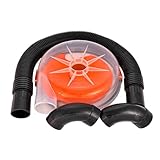
- KEEPS YOUR FILTER CLEANER — SO YOUR VAC KEEPS WORKING: Dustopper PRO captures dust and debris before it reaches your shop vacuum filter, helping maintain airflow, reduce filter cleaning and extend filter life
- SAVE MONEY ON REPLACEMENT FILTERS: Stop sending valuable filters to an early grave; by separating debris before it reaches the vacuum, Dustopper PRO can reduce filter replacement and maintenance costs — an upgrade designed to keep paying you back
- TWO HIGH-FLOW SWEEP ELBOWS INCLUDED: Smooth-radius 90° sweep elbows help reduce the airflow restriction created by conventional sharp-turn fittings and make it easier to configure Dustopper PRO around your shop, tools and workspace
- THE ORIGINAL PATENTED LOW-PROFILE DESIGN: Dustopper helped redefine what a compact, bucket-top dust separator could be; the PRO delivers proven low-profile separation without the tall cyclone that gets in the way
- INVENTED AND MADE IN THE USA: Designed by an American craftsman and manufactured in the USA; seals securely to a standard 5-gallon bucket to create a compact dust-separation system built for real workshops

- Powerful 6.3-amp motor delivers a maximum airflow capacity of 677 CFM for a greater suction capability.
- 12” impeller offers a high air flow capability which contributes to an increased efficiency and overall dust collection performance.
- Holds up to 20 Gal. of dust to help keep your space clean and organized.
- 5 hose adapters allow for the connection to a range of woodworking machines tools and facilitate efficient dust collection at the source.
- Sturdy construction ensures durability.

- 【HIGH EFFICIENCY】 Our DEWALT high efficiency dust separator can capture wood chips and other debris before they enter your vacuum cleaner, reducing suction loss due to clogged vacuum filters. Saves you the cost and time of expensive filter and dust bag replacement.
- 【WIDE APPLICATION】 This dust separator applies to most materials: wood chips, drywall dust, concrete dust, clay silica dust, soda water, cooling ash and soot, water, metal shavings, baking powder, grass and leaves, pets hair, drug waste and more.
- 【COMPATIBLE DESIGN】 The four-caster base of the dust collection system makes it very stable and easy to move around the workshop. Our 6 gallon shop vacuum system barrels are easy to empty. With 1-7/8" or 2-1/2" port, it can be used with most vacuum cleaners, such as household vacuum cleaners, industrial vacuum cleaners, sweepers, etc.
- 【PREMIUM MATERIALS】 All included parts are made of durable, high-quality and heat resistant materials with anti-clogging design for optimum efficiency.
- 【WHAT YOU GET】1 x DEWALT dust separator, 1 x 6 gallon poly bucket (vacuum cleaner not included), 2 x Hose Holder, 1xLid, 2 x Lid Sealing Strip, 2 x Lid Latch, 2 x Handle, 1 x 1-7/8" Hose, 1 x Wheel Bracket, 4 x Caster bushing, 4 x Screws (3.9 * 16 F), 4 x Screws (4.8 * 16 F),1 x 3 years limited warranty.

- 【Advanced Cyclone Dust Separator for Maximum Dust Collection Efficiency】This low profile dust separator uses advanced cyclone airflow technology to separate fine dust, sawdust, wood chips, drywall debris, pet hair, and workshop waste before reaching your shop vacuum filter. Designed for woodworking dust collection, garage cleaning, sanding cleanup, and wet dry vacuum applications, this cyclone dust separator helps maintain strong suction performance, reduce vacuum clogging, and improve overall dust collection system efficiency for professional workshops and home garages
- 【Protects Shop Vacuum Filters & Extends Vacuum Life】This high efficiency dust separator for shop vac systems helps prevent dust and debris from entering your wet dry vacuum, reducing filter blockage and minimizing the need for expensive filter replacements and vacuum bag changes. Ideal for woodworking tools, drywall sanding, construction cleanup, fine dust collection, and heavy-duty workshop debris removal. Helps improve shop vacuum airflow, suction consistency, and long-term vacuum performance during demanding dust collection tasks
- 【Low Profile Space Saving Design for Workshops & Garages】Unlike bulky dust collection attachments, this compact low profile dust separator is designed to fit easily under workbenches, inside workshop cabinets, and in tight garage storage spaces without sacrificing airflow performance. The stable low-profile structure helps reduce tipping while supporting efficient debris separation for woodworking dust collection systems, vacuum cyclone collector setups, and shop vacuum separator applications
- 【Fits Standard 5 Gallon Buckets with Leak Resistant Seal】This bucket top dust separator is compatible with most standard 5 gallon buckets and wet dry shop vacuum systems. Built with a thick sealing gasket to help reduce air leaks and maintain strong vacuum suction during dust collection. The durable separator lid design supports efficient fine dust separation, sawdust collection, drywall debris removal, and workshop cleanup for both professional contractors and DIY users
- 【Complete Dust Collection Kit for Wet Dry Vacuums】Includes 1 low profile cyclone dust separator lid, 90 degree elbow, hose connectors, and 2-1/2 inch diameter × 43 inch long hose for fast setup with most shop vac and wet dry vacuum systems. Perfect for woodworking dust collection, garage cleanup, sanding dust removal, construction debris collection, and workshop vacuum attachment applications. This vacuum cyclone separator system helps create a cleaner workspace while improving suction performance and reducing dust buildup inside your vacuum cleaner

- Powerful Air Intake: This portable vortex dust collector provides 1550CFM strong airflow for rapid dust removal. It efficiently collects both wood chips and fine sawdust, keeping your workshop clean, enhancing air circulation, and supporting smoother, more efficient woodworking tasks
- Ample Dust Storage: Featuring dual 42-gallon (159L) large non-woven bags, this woodshop dust collection system allows longer continuous operation with fewer stops. It efficiently handles dust and debris from medium and small woodworking tasks, saving time and increasing overall workshop productivity
- Precision Air Filtration: Featuring 2.5-micron filtration, this dust collection system for woodworking effectively captures fine wood dust, chips, and particles. It lowers airborne contaminants, maintains cleaner air, and reduces dust exposure, supporting a more efficient and comfortable woodworking environment
- Durable Motor Design: Our vortex cone dust collector comes with a 3.0HP high-performance induction motor that maintains steady suction while operating at ≤90dB. Its overload-resistant structure extends motor life, delivering consistent airflow for efficient dust removal and uninterrupted workshop workflow
- Fast Dust Disposal: Equipped with clip-on fixtures, our wood dust collector allows for fast and easy removal of filter and collection bags. Simply release the clips to dump sawdust and collected debris in seconds, streamlining maintenance and keeping your workshop clean with minimal effort

- INCLUDES: (1) Wall hanging dust collector with mounting bracket & 1 micron dust collector filter bag. Compact size is ideal for small Pro or hobby shop
- REUSABLE 1 MICRON BAG: Comes with built-in window to view dust level and an easy-dust disposal zipper to ensure optimal air quality by stopping fine dust particles and pollutants from entering back into the air
- IMPROVED DUST REMOVAL EFFCIENCY: The dust collector's Vortex Base design guides airflow in a controlled manner which reduces turbulence and moves a greater amount of dust with up to 10% improved efficiencies over comparative model
- SPECIFICATION: Features 1 HP induction motor with dual voltages 120V/240V | 12 amp at 120V, 6 amp at 240V; motor speed: 3450 RPM | airflow capacity - 560 CFM
- COMPATIBILITY: With a 4 inch Inlet port – able to attach the dust-collector hose directly to whatever machine you are using
Health Hazards Associated with Wood Dust
The longer you’re exposed to wood dust, and the higher the concentration, the greater the risk. For a small garage shop, where ventilation can be a challenge, this risk is amplified.
Respiratory Issues
Inhaling wood dust can lead to a range of respiratory problems, from immediate irritation to chronic conditions.
Irritation and Allergies
Even short-term exposure can cause coughing, sneezing, runny nose, and itchy eyes. Some individuals can develop allergic reactions to specific types of wood dust.
Asthma and Bronchitis
Prolonged exposure can exacerbate existing respiratory conditions like asthma or even trigger new ones. Chronic bronchitis is a common concern for woodworkers.
Lung Damage and Cancer
Perhaps the most serious concern is the potential for long-term lung damage. Certain types of wood dust, particularly from hardwoods, have been classified as carcinogens by the International Agency for Research on Cancer (IARC). This is not a risk you want to take lightly.
Other Health Concerns
Beyond the respiratory system, wood dust can also impact other parts of your body.
Skin Irritation
Direct contact with wood dust can cause dermatitis, skin rashes, and itching, especially for those with sensitive skin.
Eye Irritation
Fine particles can easily get into your eyes, causing redness, discomfort, and even minor abrasions.
Impact on Your Tools and Workspace
Dust isn’t just a personal health hazard; it’s a menace to your equipment and the longevity of your projects.
Tool Malfunction and Reduced Lifespan
Dust infiltrates everything. It coats motors, clogs cooling vents, and grinds away at bearings and moving parts.
Electrical Component Damage
Fine dust can conduct electricity, leading to short circuits and premature failure of your power tools.
Reduced Cutting Accuracy
A thin layer of dust on a saw blade can alter its cutting angle slightly, leading to less precise cuts and diminishing the quality of your work.
Increased Maintenance
Constantly cleaning dust off your tools is a time-consuming chore. Beyond that, the abrasive nature of dust significantly shortens the lifespan of your machinery, leading to expensive repairs or replacements.
Compromised Project Quality
You meticulously plan and execute your projects, only to have them marred by dust.
Finish Imperfections
Apply a finish to a dusty surface, and you’re likely to end up with an uneven, bumpy, or speckled result. Sanding and refinishing become a frustrating necessity.
Glue Joint Weaknesses
Dust trapped in glue joints can prevent a strong bond, leading to weaker and potentially failing connections in your furniture or other creations.
When setting up a small garage shop, having an efficient dust collection system is crucial for maintaining a clean and safe workspace. For those interested in optimizing their outdoor spaces, a related article on patio maintenance can provide valuable insights into keeping your environment tidy. You can read more about it in this article: Patio Maintenance 101: Keep Your Outdoor Space Looking Great. This resource highlights the importance of cleanliness, which is equally applicable to both outdoor areas and workshop settings.
Essential Components of a Dust Collection System
Now that you understand the enemy, let’s talk about the weapons. A dust collection system, at its core, is designed to capture airborne dust at its source and remove it from your workspace. While the complexity can vary, all effective systems share fundamental components that work in synergy.
The Prime Mover: The Dust Collector Motor and Impeller
This is the heart of your system, providing the power to draw air and dust into the collection unit.
Motor Horsepower
The horsepower of the motor directly correlates to the airflow and suction power of the collector. For small garage shops, a range of 1 to 2 horsepower is often sufficient, depending on the tools you most frequently use. More powerful motors allow for longer duct runs and can handle larger volumes of dust more efficiently.
Impeller Design
The impeller, a rotating fan, is responsible for creating the airflow. Its design (e.g., radial blade, paddle wheel) influences efficiency and its ability to handle larger debris. Some impellers are designed to resist clogging from larger chips.
The Capture Mechanism: Intake and Hose Selection
This is where the dust is initially drawn into the system. The design of your intake ports and the quality of your hoses are critical for effective capture.
Intake Port Design
Most dust collectors have a single intake port, but the effectiveness of capture depends on how close it is to the dust-generating tool.
Single Stage vs. Two Stage
- Single Stage: Simpler systems where dust and chips are drawn directly into a collection bag or bin. These are generally less expensive but can clog more easily, especially with larger chips.
- Two Stage: These systems utilize a cyclone separator to spin heavier debris out of the airstream before it reaches the fan and filter. This protects the fan and filter from larger particles and significantly reduces clogging. For small shops, a well-designed single-stage system might suffice, but a two-stage system offers superior performance and reduced maintenance.
Hose Diameter and Flexibility
The size of your dust collection hose impacts airflow. Too small, and you restrict airflow and increase static pressure. Too large, and you lose suction velocity.
Recommended Diameters
For most small garage shop tools, hoses in the 2.5 to 4-inch diameter range are common. Many portable tools come with specific dust port sizes, so matching your hose to these ports is important. Adapter kits are readily available.
Material and Static Dissipation
Vinyl hoses are common for their flexibility and affordability. However, static electricity can build up, causing dust to cling to the inside of the hose and even shock you. Look for hoses designed with static dissipation properties or consider grounding your system.
The Filtration Frontier: Separating Dust from Air
Once the dust is drawn in, it needs to be separated from the air before that air is exhausted. This is where filtration comes in.
Filter Types and Efficiency
The effectiveness of a dust collection system is largely determined by its filtration system.
Bag Filters (Generally Lower Efficiency)
Many entry-level dust collectors use simple cloth or paper bags. These are adequate for larger particles but less effective at capturing the fine dust that poses the greatest health risk. Micron ratings can vary significantly.
Canister Filters (Higher Efficiency)
Modern and more advanced dust collectors often use canister filters. These offer significantly higher filtration efficiency, often capturing particles down to 1 micron or even smaller. This is crucial for capturing the fine dust that can penetrate deep into your lungs.
HEPA Filters
For the ultimate in air purity, HEPA (High-Efficiency Particulate Air) filters are the gold standard. They are designed to capture at least 99.97% of airborne particles 0.3 microns in size. While not always standard on basic dust collectors, they are a valuable upgrade for any small shop concerned with air quality.
The Collection Point: Dust Bin or Bag
This is where the captured dust and debris are stored before disposal.
Bagged Systems
Dust is collected in a bag that is periodically removed and emptied. This is typical of simpler, less expensive systems. Disposal can be messy if the bag isn’t handled carefully.
Bin Systems (Often with Cyclones)
More advanced systems, particularly those with cyclone separators, collect dust in a bin or drum. This offers a cleaner disposal process, as the majority of debris is separated before reaching the filter.
Types of Dust Collection Systems for Small Garage Shops
For your specific needs, you’re looking for systems that balance effectiveness with practicality. You won’t be installing a full-blown centralized system, but rather looking at the best portable, stationary, and intermediary solutions that fit your footprint and budget.
Portable Dust Collectors: Flexibility and Compactness
These are your go-to for small shops where space is at a premium and you need the ability to move your dust collection around.
Key Features to Look For
When considering a portable unit, several features are paramount.
Small Footprint with Wheels
You need something that you can easily maneuver between tools and then tuck away when not in use. Wheels are a must.
Adequate Suction Power for Targeted Use
Ensure the horsepower and airflow (CFM) are sufficient for the primary tools you’ll be connecting it to. A 1-2 HP unit is often a good starting point.
Easy Bag/Bin Access for Disposal
The less hassle involved in emptying the collection bin or bag, the more likely you are to actually do it. Look for tool-less access and simple bag removal.
Reasonable Noise Level
Portable units can be quite loud. While ear protection is always recommended, some models are designed to be slightly quieter than others.
Top Portable Options in Practice
- Shop Vacs (with the right filter): While not dedicated dust collectors, high-quality shop vacs (e.g., from brands like Festool, Shop-Vac, DeWalt) can serve as a basic dust collection solution, especially when paired with excellent filters. Look for models with the ability to accept finer dust bags or even an aftermarket HEPA filter. They are incredibly versatile and affordable.
- Dedicated Portable Dust Collectors (e.g., Jet JDP-1, Powder River)–: These are designed specifically for dust collection and often offer better airflow and filtration than a standard shop vac. They’re a step up in performance and price, providing a more robust solution. Look for models that offer a decent micron filtration level out of the box.
Stationary Dust Collection Systems: Powerful and Dedicated
While “stationary” might sound large, even smaller, single-machine units can be considered stationary in a small garage. These are typically designed to work with one specific tool at a time but offer more robust dust capture.
Advantages for Small Shops
Even a smaller stationary setup can offer significant benefits.
Enhanced Suction and Airflow
These units often boast more powerful motors and better impeller designs than their portable counterparts, leading to superior dust capture.
Improved Filtration
Many stationary units come with better filters as standard, capturing finer dust particles more effectively.
Reduced Tool Maintenance
By directly connecting to a specific tool, you significantly reduce the amount of dust that reaches your machine’s internal components.
Examples of Stationary Solutions
- Single-Stage Dust Collectors (e.g., Powermatic PM1300, Laguna PFlux)–: These are relatively compact and connect directly to a single tool like a miter saw or table saw. They are generally more affordable than two-stage systems. Ensure you check the micron rating of the filter.
- Two-Stage Dust Collectors (e.g., Laguna C|Flux, Oneida Airmaster–: While on the higher end, a smaller two-stage unit can be a game-changer for a small shop. The cyclone technology is fantastic at pre-separating debris, protecting the filter and fan. If space and budget allow, this is often the best long-term investment.
DIY and Hybrid Solutions: Customizing Your Collection
Your ingenuity is your greatest asset in a small garage shop. Combining off-the-shelf components or building your own can be a cost-effective and highly efficient approach.
The Power of the Cyclone Separator
A DIY cyclone separator is a popular upgrade for shop vacs or even small dust collectors.
How it Works
A cyclone separator uses centrifugal force to spin heavier dust and chips out of the airstream and into a collection bin or drum. This significantly reduces the amount of debris reaching your vacuum’s filter, extending its life and improving performance.
DIY Materials
You can build a surprisingly effective cyclone separator using simple materials like a 5-gallon bucket, a lid, and PVC fittings. Online tutorials abound, providing detailed instructions. Brands like Clear Vue and Dust Deputy offer pre-made cyclone components that are easy to integrate.
Upgrading Shop Vacs
As mentioned earlier, a good shop vac is a versatile tool. You can significantly enhance its dust collection capabilities.
High-Quality Filters
Invest in aftermarket filters, especially HEPA filters, designed to fit your shop vac. This is arguably the most impactful upgrade for fine dust capture.
Dust Deputy or Cyclone Attachment
Pairing your shop vac with a cyclone separator (either purchased or DIY) is a highly effective hybrid solution. This dramatically improves the separation of chips and larger debris before they hit the vacuum’s filter.
Key Considerations for Small Garage Shops
Beyond the type of system, specific factors pertaining to your garage workshop environment are critical to making the right choice.
Space Constraints: Maximizing Efficiency in Limited Square Footage
You don’t have the luxury of a vast workshop, so every inch counts.
Footprint and Storage
- Verticality: Consider systems that allow for vertical mounting or have a relatively small base. Can it be mounted on a wall when not in use?
- Compact Designs: Look for dust collectors with integrated wheels that allow for easy movement and storage. Some smaller units can even fit under a workbench.
- Hose Management: Effective hose management is crucial. Think about retractable reels or simple hook systems to keep hoses tidy and out of the way when not connected.
Multi-Tool Connectivity: The Challenge of a Single Port
Most small dust collectors have a single intake port. This means you can only connect to one tool at a time.
Hose Swapping Strategy
Develop a system for quickly swapping hoses between tools. Color-coding hoses or having a set of common adapters readily available can streamline this process.
Blast Gates
For more advanced setups, consider installing blast gates in your ducting. These are manual or automatic valves that allow you to isolate dust collection to a specific tool, maximizing airflow to that connection. Even a simple manual blast gate can make a big difference.
Budget: Making Smart Investments
You want effective dust collection without breaking the bank. There’s a range of options to suit different financial capacities.
Entry-Level vs. Mid-Range vs. Premium
- Entry-Level: Focus on high-quality shop vacs with excellent filter upgrades (HEPA is key). These offer the most budget-friendly initial investment.
- Mid-Range: Dedicated single-stage portable or small stationary dust collectors offer a significant step up in performance and filtration for a moderate price increase.
- Premium: Two-stage systems, while more expensive, offer superior dust separation, cleaner air, and less maintenance in the long run. If your budget allows, consider this as a long-term investment.
Long-Term Cost Savings
Remember to factor in the cost of replacement filters, bags, and potential tool repairs due to dust damage. A slightly more expensive, higher-quality system that significantly reduces these costs can be a wiser financial choice over time.
Ventilation and Air Exchange: Complementing Your Dust Collection
Dust collection systems capture dust at the source, but they don’t always provide sufficient air exchange for the entire workshop.
Importance of General Ventilation
Even with effective dust collection, you’ll still have some ambient dust. Good general ventilation helps to dilute and remove this residual dust.
Options for Small Shops
- Open Doors/Windows: The simplest method, but not always practical depending on weather or security.
- Air Purifiers: A good quality air purifier with a HEPA filter can significantly improve the overall air quality in your garage shop by continuously filtering the air.
- Exhaust Fans: Strategically placed exhaust fans can help push dust-laden air out of the garage.
Integrating Dust Collection with Ventilation
Your dust collection system should be seen as part of a larger air quality strategy. When you’re using your dust collector, ensure you have some form of general ventilation. Conversely, after a long woodworking session, running an air purifier can capture any dust that settled.
If you’re looking to optimize your small garage shop, investing in the best dust collection system can make a significant difference in maintaining a clean and safe workspace. For more insights on how to effectively manage dust and debris in various settings, you might find this article on gentle stucco cleaning particularly helpful, as it discusses techniques that can also be applied to woodworking and other projects where dust control is essential.
Top Dust Collection System Recommendations for Small Garage Shops
| Feature | Best Dust Collection System for Small Garage Shop |
|---|---|
| Airflow | High CFM for efficient dust collection |
| Portability | Compact and easy to move around the small garage shop |
| Filtration | Effective filtration system to capture fine dust particles |
| Noise Level | Low noise operation for a quieter working environment |
| Dust Storage | Large capacity dust storage for less frequent emptying |
Based on the above considerations, here are some of the top contenders and approaches for your small garage shop. These recommendations aim to provide a good balance of performance, affordability, and practicality.
Best All-Around Portable Solution: High-End Shop Vac with Cyclone Separator
This approach offers the most flexibility and bang for your buck, especially if you’re already the owner of a decent shop vac.
Why this is a Top Pick
- Versatility: A shop vac can be used for many tasks beyond dust collection.
- Cost-Effectiveness: Upgrading an existing shop vac is cheaper than buying a dedicated collector from scratch.
- Effectiveness: When paired with a cyclone and good filters, it becomes a surprisingly powerful dust capture system.
Recommended Components
- Shop Vac: Look for a 2.5 HP or higher model with good suction and a wide mouth. Brands like Festool, DeWalt, or a high-quality Shop-Vac are excellent starting points.
- Cyclone Separator: The Dust Deputy (from Oneida Air Systems) is a highly regarded, relatively inexpensive option that fits on a 5-gallon bucket. Clear Vue also offers excellent DIY and modular cyclone separators.
- Filters: Invest in a HEPA filter for your shop vac. This is non-negotiable for capturing fine dust. You may also want a finer pre-filter for the cyclone if your primary vacuum filter isn’t rated for very fine particles.
Practical Application
Connect the cyclone separator to your shop vac. The hose from your tool connects to the inlet of the cyclone. Dust and chips enter the cyclone, spin out into the bucket, and only the finer dust makes its way to the shop vac’s filter. Use appropriately sized hoses (2.5″ or 4″) and adapters for your tools.
Best Dedicated Portable Dust Collector: Jet JDP-1F or Similar
If you prefer a dedicated unit that’s still portable, the Jet JDP-1F (or similar models from brands like Grizzly or Porter-Cable) offers a good balance.
Features that Make it Stand Out
- Designed for Dust: Engineered specifically for dust collection, often with better impeller design and airflow than a standard shop vac.
- Adequate Filtration: Typically comes with at least a 5-micron bag filter, which is better than basic shop vac filters but still benefits from finer filtration upgrades.
- Compact and Maneuverable: Designed to be easily moved around a shop.
Potential Upgrades
- Canister Filter: If the unit comes with a bag filter, consider upgrading to a canister filter with a significantly lower micron rating for better fine dust capture.
- Hose Adapters: Ensure you have the necessary adapters to connect to all your tools.
When to Choose This Option
This is a great choice if you have a bit more budget than a shop vac setup and want a dedicated unit that’s ready to go out of the box. It’s less versatile than a shop vac but often more powerful and efficient for dust collection alone.
Best Entry-Level Stationary Solution: Small Single-Stage Dust Collector
For a slightly more permanent setup dedicated to a specific tool or area, a small single-stage dust collector can be a good option.
Examples
- Powermatic PM1300: A popular choice known for its robust construction and good airflow for its size.
- Delta 50-760: Another well-regarded option often found at a competitive price point.
Considerations and Enhancements
- Filter Efficiency: Most single-stage collectors come with bag filters. Prioritize units with canister filters or be prepared to upgrade to a finer micron filter.
- Ducting for a Single Tool: You might rig up a simple, short duct run directly from the collector to your most frequently used tool (e.g., a miter saw or band saw).
- Blast Gates: Even a basic manual blast gate at the collector’s output can improve efficiency when you’re only using one tool.
Who Should Consider This
This option is for you if you’re willing to dedicate a small space to a dust collector and want more power than a portable unit without the complexity or cost of a two-stage system. It’s a good compromise for cleaning up a specific work area.
DIY Centralized Ducting (Mini Version)
This is an advanced approach for the ambitious DIYer that can offer significant benefits even in a small shop if implemented strategically.
The Concept
Instead of moving a collector to each tool, you run ducting from a central point to multiple tools. For a small garage, this might mean a single, more powerful collector with a limited duct run.
Key Elements
- More Powerful Collector: You’ll need a collector with a higher horsepower (e.g., 2 HP or more) and sufficient CFM to overcome the resistance of ducting.
- Appropriate Ducting: Use rigid PVC or flexible metal ducting for better airflow. Avoid undersized flexible hose for any permanent runs.
- Blast Gates: Absolutely essential for controlling airflow to each tool.
- Strategic Layout: Plan your ducting runs to be as short and direct as possible, minimizing bends.
When to Tackle This Project
This is for the dedicated hobbyist who enjoys the process of building and optimizing. It requires more upfront planning and potentially a higher initial investment but offers the convenience of quick tool changes. It’s a miniaturized version of a pro shop setup.
Conclusion: Breathe Easier, Create Better
Transforming your small garage shop into a dust-free zone is not an impossible dream. It requires understanding the adversary – wood dust – and choosing the right tools to combat it. Whether you opt for the incredible flexibility of a shop vac augmented with a cyclone and HEPA filter, the dedicated efficiency of a portable dust collector, or even embark on a DIY ducting project, the key is to start.
Every step you take towards better dust collection is a step towards a healthier you, longer-lasting tools, and more beautiful, professional-looking projects. Don’t let dust dictate the quality of your woodworking experience. By implementing a system that fits your space, your budget, and your ambitions, you can unlock the full potential of your garage shop and truly enjoy the art of creation. So, take a deep breath (clean air, of course!) and get your dust collection system sorted. Your workshop, your lungs, and your craftsmanship will thank you for it.
Leave a Reply