You’ve eyed your fence. It’s seen better days, hasn’t it? Moss has a tenacious grip, algae paints streaks like abstract art, and that general grimy film makes it look tired. The allure of a pressure washer is strong. Imagine: a swift blast of water, and poof, your fence is rejuvenated. But a nagging question lingers: can you actually do it without turning your prized boundary into a pile of splintered wood? The answer, as with many things, is a nuanced “yes, but.”
You wouldn’t tackle a delicate antique with a sledgehammer, and similarly, your fence has its vulnerabilities. The primary concern when pressure washing is the sheer force of the water.
The Force of Water: Not All Pressure is Equal
- ### High PSI, High Danger: The Misconception of More is Better
You might think that a higher PSI (pounds per square inch) on your pressure washer means a faster, more efficient clean. While it certainly blasts away stubborn grime, it also significantly increases the risk of damage. Wood, especially older or softer wood, can be easily gouged, splintered, or even have entire layers stripped away by excessive pressure. This is not just aesthetically unappealing; it compromises the structural integrity of your fence, making it more susceptible to future rot and insect damage.
- ### Nozzle Selection Matters: The Wrong Tip Can Be a Weapon
Pressure washers come with a variety of nozzle tips, each designed for different tasks and surfaces. A narrow-angle nozzle (like a 0-degree or 15-degree) emits a highly concentrated stream of water, akin to a laser beam. While incredibly effective at removing difficult stains, it’s also far too aggressive for most fence materials. Using such a nozzle is a fast track to damaging your fence. Wider-angle nozzles (25-degree or 40-degree) distribute the water over a larger area, reducing the intensity and therefore the risk.
- ### Wood Type and Condition: Not All Fences Are Created Equal
The type of wood your fence is made from plays a critical role. Hardwoods like cedar or redwood are generally more durable and can withstand slightly higher pressures than softer woods like pine or fir. Furthermore, the age and condition of your fence are paramount. A brand-new, robust fence will be more forgiving than an older, weathered one that may already have existing cracks, splits, or soft spots. Pressure washing an already compromised fence is like asking for trouble.

- HIGH PRESSURE WASHER: LWQ power washer with deep cleaning high pressure up to 2.5 GPM of water flow. It's saving water and energy, it also ensures high cleaning efficiency and the ability to clean objects with complex shapes and structures, which makes it ideal for cleaning various surfaces in your home, such as driveways, patio furniture, and cars.
- MULTI-PURPOSE USE: Equipped with 4 quick-connect metal spray nozzles (water-pressure strength:0°>15°> 25°> 40°) and a foam cannon, the LWQ pressure washer is easy to clean objects with complex shapes and structures. The detergent bottle can be filled with chemicals such as bleach, the cleaner will not pass through the pump.
- CONVENIENT TO USE: LWQ Pressure Washer designs of 2 rollers for easy movement and operation, while the bottom of the body adds an anti-tipping design for overall stability when not in motion. Simple assembly + dual-roller design + anti-tipping base + faucet/bucket water collection system - making it more convenient to use anywhere.
- EASY TO STORAGE: With power cord hook and nozzle holders, it is easy to access or to store in a garage/pantry after use. In addition, its compact design for easy to store in a garage or pantry when not in use. The LWQ pressure washer is perfect for cleaning concrete, pavement, driveways, patios, decks, sidewalks, RVs, cars, boats, homes, fencing, and more.
- USER-FRIENDLY & SAFETY: The LWQ pressure washer using high-pressure water flow to clean up the dirt, for saving water and energy and ensuring high cleaning efficiency. Tip: Before turning on the pressure washer, exhaust the air in the high pressure hose as well as the inlet hose, this will ensure that the machine can spray high pressure water stream properly.


- Delivers 2500 max PSI and 1.76 max GPM (at lowest pressure), and 2000 rated PSI and 1.2 rated GPM of water flow; Pro-style steel extendable 17.5” wand with quick-connect nozzles (0°, 15°, 25°, turbo and soap applicator)
- Super compact and lightweight at 16.5” tall and 19 pounds for convenient storage and portability; Four quick-lock wheels with 360° steering design and low center of gravity engineered for anti-tipping design
- Easy-coil nylon braided 25' hose; 20 ounce onboard soap tank to add detergents/chemicals for heavy duty cleaning power on decks, driveways, garage floors, stairs, fencing, patio furniture and vehicles
- Pump automatically stops when trigger is not engaged to conserve energy and promote pump and motor life
- Backed by a 3-Year limited service, labor and parts coverage with nationwide customer service and support network
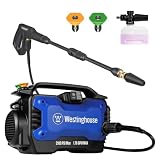
- BIG POWER. SMALL DESIGN: Delivers an impressive 2100 max PSI and 1.76 max GPM at lowest pressure, with 1800 rated PSI and 1.2 rated GPM so you're able to handle a range of tough jobs
- GRAB-AND-GO CLEANING: The ultra compact 10 pound electric pressure washer is easy to use, carry and store for everyday outdoor cleanups, wherever and whenever you find them
- ORGANIZED FOR EASY SETUP AND STORAGE: Built-in holders keep the spray gun, lance and standard spray nozzles together between jobs so it's always ready to grab and go
- SUPER SOAPER: The adjustable foam cannon lets you apply thick, clinging foam to loosen grease, grime and stains from cars, windows, decks and more
- GO GET THE GRIME: Enjoy extended reach with a 35 foot GFCI power cord and 20 foot high-pressure hose so you can walk and wash all around vehicles and outdoor spaces

- Delivers 2300 max PSI and 1.76 max GPM (at lowest pressure), and 1900 rated PSI and 1.24 rated GPM of water flow; Pro-style steel extendable 17.5” wand with quick-connect nozzles (0°, 15°, 25°, turbo and soap applicator)
- Super compact and lightweight at 16.5” tall and 19 pounds for convenient storage and portability; Four quick-lock wheels with 360° steering design and low center of gravity engineered for anti-tipping design
- Easy-coil nylon braided 25' hose; 20 ounce onboard soap tank to add detergents/chemicals for heavy duty cleaning power on decks, driveways, garage floors, stairs, fencing, patio furniture and vehicles
- Pump automatically stops when trigger is not engaged to conserve energy and promote pump and motor life
- Backed by a 3-year limited service, labor and parts coverage with nationwide customer service and support network

- POWERFUL PERFORMANCE: Delivers 2100 max PSI and 1.76 max GPM (at lowest pressure), and 1800 rated PSI and 1.2 rated GPM of water flow. Ideal for decks, sidewalks, siding, fences, garage floors, cars and patio furniture; Foam cannon accessory included
- DURABLE DESIGN: Hard working AC 120V electric motor and long lasting, maintenance free axial pump with auto stop provides a max of 1.76 gallons of water a minute for every job
- USER FRIENDLY & COMPACT: Solid construction with low 26″ profile, 5” never flat wheels and 35’ GFCI cord provide easy transportation and maneuverability
- COMES READY TO CLEAN: 20′ foot abrasion resistant super flex hose with lightweight high pressure spray gun, foam cannon, wand and three quick connect nozzles (15°, 25° and turbo)
- VERSATILE DESIGN: Compatible with pressure washer accessories such as surface cleaners, undercarriage cleaners and foam cannons with M22 fittings

- Powerful Cleaning Performance: Equipped with a high‑efficiency brushless motor, it delivers up to 1,450 PSI and 3.0 GPM flow—6× more powerful than a standard garden hose. It blasts away stubborn grime on cars, patios, walls, and other outdoor surfaces in seconds for a fast, thorough clean.
- Cordless Power, Multi‑Angle Clean: Dual 4.0Ah batteries with fast charging give you up to 30 minutes of continuous use on a full charge. No cord to hold you back — clean wherever you want. It comes with a 6‑in‑1 nozzle that lets you easily switch modes by simply rotating: 0°, 15°, 25°, 40°, a wide spray, and a 45° angled tip that’s perfect for cleaning the undercarriage and wheel arches.
- Universal Water Source Compatibility: The kit comes with multiple adapters to connect to faucets, buckets, pools, rivers, or garden hoses, fitting all standard connections on the market for hassle‑free water access. A built‑in shut‑off valve lets you cut the water flow right at the unit—no need to run back to the faucet. The 16.4‑ft flexible hose and weighted filter block debris, ensuring a steady, clean water supply.
- Lightweight & Neatly Stored: Weighing only 2.18 lbs, it’s easy to carry with one hand. The included waterproof hard case keeps everything organized—the unit, foam cannon, 6‑in‑1 nozzle, two batteries, charger, hose, filter, adapters, shut‑off valve, and manual—all compactly packed in your trunk for grab‑and‑go convenience.
- Easy Setup, Quick to Use: We’ve simplified the design to eliminate complicated installation steps, so anyone can get started with ease. The included instruction guide walks you through assembly and connection in no time. Lightweight and compact, it saves space and stores conveniently in your garage, yard, or vehicle.

- HIGH PRESSURE WASHER: LWQ power washer with deep cleaning high pressure up to 2.5 GPM of water flow. It's saving water and energy, it also ensures high cleaning efficiency and the ability to clean objects with complex shapes and structures, which makes it ideal for cleaning various surfaces in your home, such as driveways, patio furniture, and cars.
- MULTI-PURPOSE USE: Equipped with 4 quick-connect metal spray nozzles (water-pressure strength:0°>15°> 25°> 40°) and a foam cannon, the LWQ pressure washer is easy to clean objects with complex shapes and structures. The detergent bottle can be filled with chemicals such as bleach, the cleaner will not pass through the pump.
- CONVENIENT TO USE: LWQ Pressure Washer designs of 2 rollers for easy movement and operation, while the bottom of the body adds an anti-tipping design for overall stability when not in motion. Simple assembly + dual-roller design + anti-tipping base + faucet/bucket water collection system - making it more convenient to use anywhere.
- EASY TO STORAGE: With power cord hook and nozzle holders, it is easy to access or to store in a garage/pantry after use. In addition, its compact design for easy to store in a garage or pantry when not in use. The LWQ pressure washer is perfect for cleaning concrete, pavement, driveways, patios, decks, sidewalks, RVs, cars, boats, homes, fencing, and more.
- USER-FRIENDLY & SAFETY: The LWQ pressure washer using high-pressure water flow to clean up the dirt, for saving water and energy and ensuring high cleaning efficiency. Tip: Before turning on the pressure washer, exhaust the air in the high pressure hose as well as the inlet hose, this will ensure that the machine can spray high pressure water stream properly.

- Cleans Cleans decks, Fences and other outdoor structures such as pergolas, gazebos and carports
- Lifts away tough grime, oils and grease and eliminates stains
- Uses the power of peroxide to lift grime without harsh chemicals
- Lifts off tough tree sap, grease and oils from decks and Fences
- Pressure washer concentrate cleans up to 6, 400 sq. Ft.

- Powerful Pressure Washer: LWQ pressure washer with deep cleaning high pressure up to 2.5 GPM of water flow. The strong pressure for less time and water, more efficient cleaning
- Multi-Purpose Power Washer: LWQ power washer with 4 quick-connect spray nozzles (water-pressure strength: 0°›15°› 25°› 40°) and 1 foam cannon, it's easy to clean objects with complex shapes and structures, such as driveways, patio furniture, machine, and wheels
- Ease Of Use: LWQ Pressure Washer with 2 rollers for easy to move around and operate, while the bottom of the body adds an anti-tipping design for overall stability when not in motion. Simple assembly + dual-roller design + anti-tipping base + faucet/bucket water collection system - for using anywhere
- Easy to Store: The pressure washer is equipped with a hook for 34.5 Ft power cord and nozzle holder for easy access. What's more, its compact size for easy to store in a garage or storage cabinet when not in use
- Water Conservation and Safety: The excellent pressure washer with high-pressure water flow to clean up the dirt, for saving water and energy and ensuring high cleaning efficiency. Tip: Before turning on the pressure washer, please exhaust the air from high pressure hose and inlet hose, to ensure the machine can spray high pressure water stream properly

- Professional concentrate cleans decks, siding, driveways, and patios - perfect for homeowners preparing for BBQs, real estate agents staging homes, or contractors finishing jobs.
- Peroxide-powered formula safely cleans wood, vinyl, concrete, brick, and composite surfaces without harsh chemicals - giving families peace of mind around children and pets.
- Covers up to 6,400 sq. ft. per bottle, helping weekend warriors and maintenance crews save money versus hiring pressure washing services while tackling spring cleaning projects.
- Ideal for businesses maintaining storefronts, homeowners restoring outdoor furniture, and anyone removing stubborn grime from driveways, fences, and walkways customers and guests see daily.
Beyond Just Splinters: Other Potential Damage Vectors
The damage isn’t limited to just cosmetic issues or structural weakening.
- ### Stripping Protective Finishes: Removing What Protects It
If your fence is sealed, stained, or painted, high-pressure washing can strip away these protective layers. While exposing new wood might seem like a good thing, it leaves the bare wood vulnerable to the elements. You’ll then be faced with a new project: re-staining or repainting, potentially sooner than you would have otherwise had to. The goal is to clean, not to remove the finish you carefully applied.
- ### Water Intrusion and Rot: The Unseen Enemy
Excessive water forced into the wood grain, especially at high pressure, can push water deep into the core of the fence boards. This moisture can get trapped, creating ideal conditions for fungal growth and rot. You might not see the damage immediately, but it can lead to significant structural issues down the line, requiring costly repairs or even a full fence replacement.
If you’re wondering, “can you pressure wash a fence,” it’s essential to understand the best practices to avoid damaging the wood or paint. A related article discusses how pressure washing can also be beneficial for other outdoor surfaces, such as roofs, by enhancing their lifespan. You can read more about this in the article titled “Boost Your Roof’s Lifespan with Pressure Washing” found here: Boost Your Roof’s Lifespan with Pressure Washing. This resource provides valuable insights into the proper techniques and precautions to take when using a pressure washer on various surfaces.
Preparing Your Fence for the Pressure: A Crucial First Step
Before you even think about firing up the pressure washer, diligent preparation is key. This is where you mitigate a significant portion of the risks.
Pre-Wash Inspection: Know Your Enemy (and Your Fence)
- ### Detail the Damage: Identify Weak Points
Walk along your fence and conduct a thorough visual inspection. Look for any loose boards, protruding nails or screws, existing cracks, rotten sections, or areas where the wood feels soft or spongy to the touch. Mark these areas or make mental notes. These are your danger zones.
- ### Assess the Grime: What Are You Dealing With?
Is it just surface dirt and light moss, or are you facing stubborn, ingrained mold and algae? The type of contamination will influence the cleaning solutions you might need and the approach you take.
Clearing the Decks: Removing Obstacles
- ### Tidy Up the Area: Create a Safe Working Zone
Clear away any plants, furniture, garden ornaments, or other items that are too close to the fence. You don’t want to accidentally damage your landscaping or have to clean debris off your lawn after washing.
- ### Secure Movable Parts: Gates and Latches
Ensure gates are securely fastened to prevent them from swinging wildly under the pressure of the water. Remove any decorative elements that might be easily dislodged.
If you’re wondering, “can you pressure wash a fence,” it’s essential to consider the right techniques to avoid damaging the wood. A related article offers valuable insights on various DIY home improvement tips that can help you maintain a sparkling exterior while ensuring your fence remains in good condition. For more information on effective cleaning methods, you can check out this helpful resource on top DIY home improvement tips.
Gentle Pre-Treatment: Softening Stubborn Stains
- ### The Power of Soaking: Water is Your Friend (in moderation)
For heavily soiled areas, consider a pre-soak with a garden hose. Allowing the water to penetrate the grime for 15-30 minutes can help loosen it, meaning you’ll need less aggressive pressure washing.
- ### Choosing the Right Cleaner: Avoid Harsh Chemicals
For stubborn mold and algae, you’ll likely need a cleaning solution. Opt for specialized fence cleaners or a diluted bleach solution (1 part bleach to 3-4 parts water). Crucially, never mix bleach with ammonia, as this creates toxic fumes. Always test any cleaner in an inconspicuous area first to ensure it doesn’t damage the wood or its finish. Apply the cleaner with a garden sprayer and let it sit for the recommended time before rinsing, ideally with a low-pressure hose.
Orchestrating the Wash: Technique is Everything

This is where the actual pressure washing happens. Get this wrong, and your fence will likely suffer.
The Settings Game: Dialing in the Right Pressure
- ### Start Low and Go Slow: The Golden Rule of Pressure Washing
Always begin with the lowest pressure setting on your machine. If you’re unsure, err on the side of caution. You can always increase the pressure gradually if needed. Many residential pressure washers offer adjustable pressure.
- ### The Right Nozzle for the Job: Matching the Tool to the Task
For most wood fences, a 25-degree or 40-degree nozzle is recommended. Avoid the red (0-degree) and yellow (15-degree) nozzles entirely for fence cleaning unless you have a very specific, targeted task and very sturdy wood. Green (25-degree) and white (40-degree) are usually your safest bets.
The Technique of Application: How You Move Matters
- ### Consistent Motion: Avoid Lingering in One Spot
Keep the wand moving in a steady, sweeping motion. Do not hold the spray in one spot for too long, as this can quickly lead to gouging and stripping the wood.
- ### Maintain a Safe Distance: Step Back to Save Your Fence
Hold the nozzle at
Leave a Reply